Turn a steel shell into a comfortable, controlled space built for everyday use!
A steel container is strong—built to survive oceans, storms, and unpredictable transport conditions. But once it becomes a building, storage space, or workspace, raw steel alone simply isn’t enough. Without the right insulation, temperatures fluctuate dramatically, moisture collects inside, and the space becomes uncomfortable or even unusable.
Insulation shifts the purpose of a container: from industrial cargo shell to functional environment. If you’re planning a container home, office, storage unit, or custom build, proper insulation isn’t just a “bonus” feature—it’s the step that makes everything else possible.
Why Container Insulation Matters?
Before interior walls, furniture, paint, or electrical work, insulation is what creates a stable, livable interior. Without it, summers become overheated, winters feel freezing, and condensation forms on the steel—damaging interior finishes and anything stored inside.
Whether you are building for comfort, long-term durability, or energy efficiency, high-quality insulation supports all three.
Key benefits include:
Regulating temperature year-round
Preventing condensation and mold
Improving energy efficiency
Extending container lifespan
Increasing comfort and usability
With proper insulation in place, your container starts to feel less like a shipping unit and more like a reliable, purpose-built structure.
Our Customization Process
Consultation
We learn about your project needs and help you select the right
container and door options.
Customization
Our experienced team modifies your container with the doors you choose, ensuring quality and precision.
Delivery
We deliver your ready-to-use, customized container directly to your location, nationwide.
Years of experience in modifying and delivering containers.
3.
Quality Builds
Doors and modifications that stand the test of time.
4.
Flexible Options
Custom door configurations to meet your specific needs.
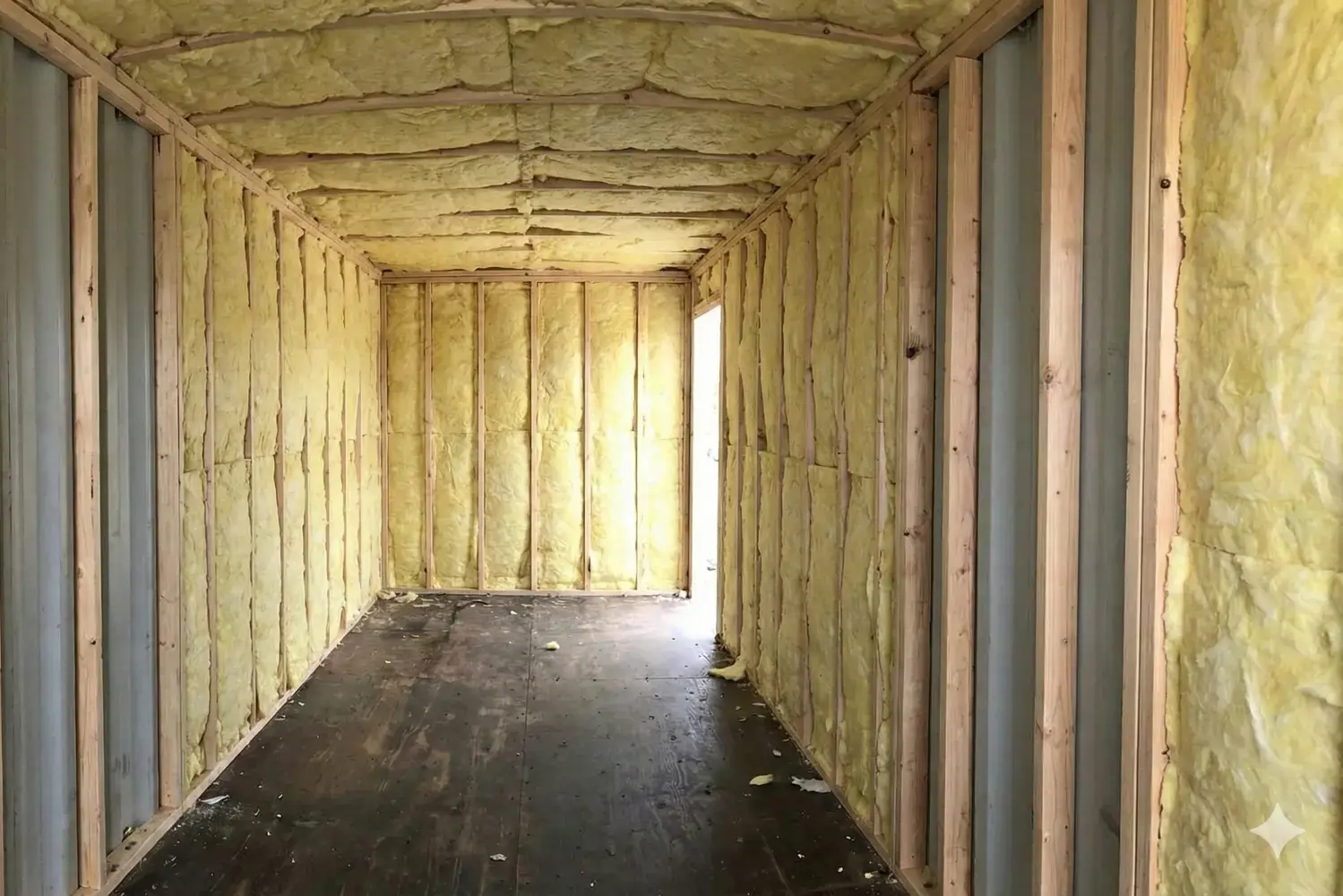
Spray Foam Insulation
Spray foam insulation is one of the most efficient and widely used methods for container construction—and for good reason. Its flexibility and sealing ability make it ideal for the ribbed interior of shipping containers.
It provides:
Full coverage and airtight sealing: Perfect for the steel ridges and tight corners where traditional insulation falls short.
Vapor and moisture protection: Reduces the risk of condensation, rust, and mold—especially important in humid or coastal environments.
Superior temperature control: Helps maintain stable interior temperatures with minimal loss or heat transfer.
Spray foam is especially effective in container homes, converted offices, and builds located in climates with seasonal or extreme fluctuations. Once installed, it becomes part of the structure—long-lasting, seamless, and efficient.
Thermal Container Insulation
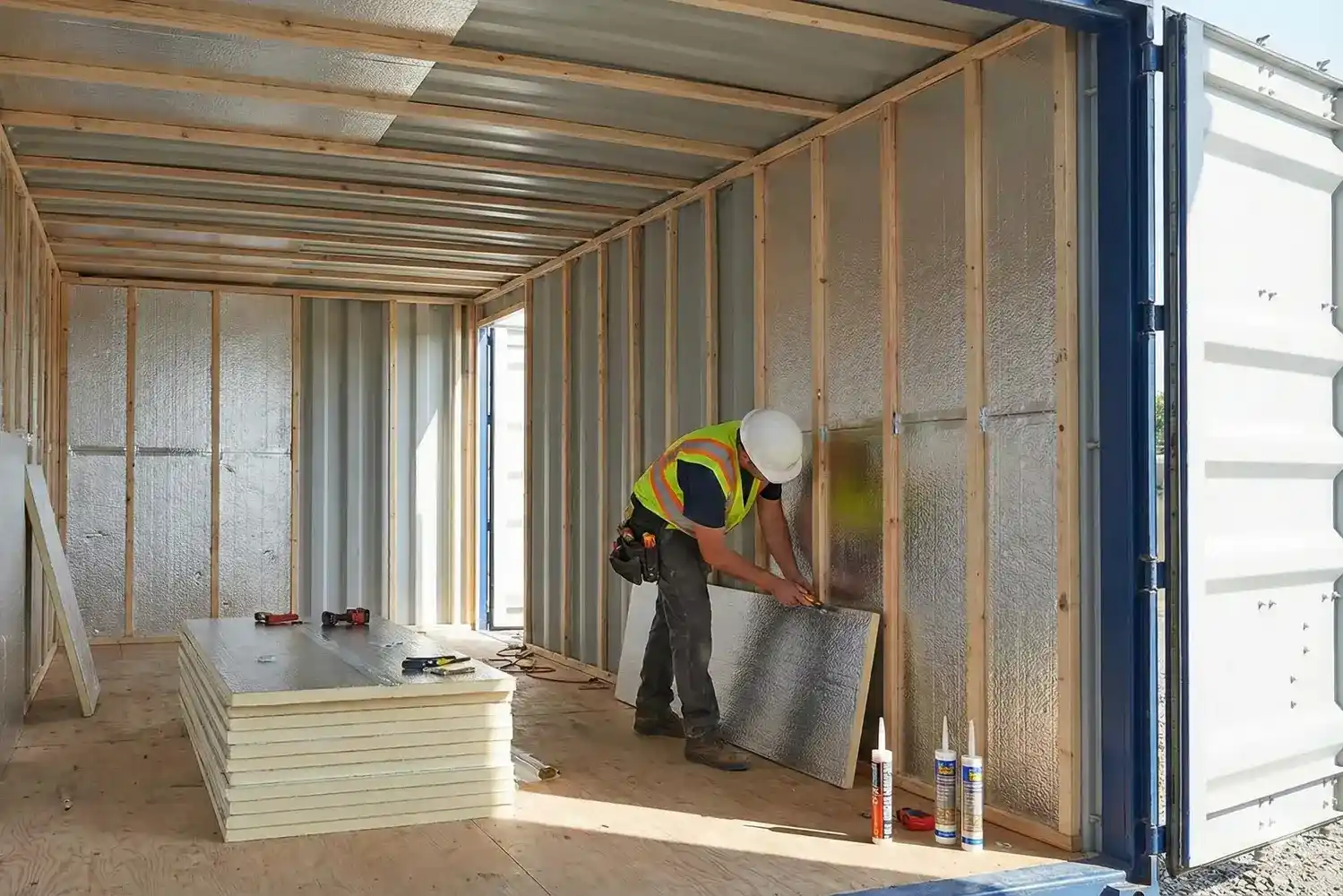
Thermal insulation focuses on temperature control and energy performance. For projects using HVAC systems, refrigeration, or requiring stable interior conditions, thermal insulation is essential.
Popular options include:
Rigid foam panels
Polyiso boards
Insulated wall systems
These solutions work well in projects where clean interior finishes and consistent performance are priorities. When used correctly, thermal insulation transforms the container from a steel box into a controlled interior space suitable for living, working, or storing sensitive equipment.
Soundproofing Containers
Not all container builds are about temperature—sometimes, the priority is sound. Whether you’re planning a music studio, workspace, or a private office, soundproofing helps control noise inside and reduce disturbances outside.
Soundproofing solutions include:
Acoustic foam or wall panels: Absorb interior echo and reduce noise reflection.
Mass-loaded vinyl barriers: Block sound transfer between interior and exterior walls.
Layered insulated wall systems: Combine thermal and acoustic protection in one setup.
When soundproofing is added to a container project, the result is a quieter, more controlled space suitable for recording, private work, or on-site production environments.
FAQ
Do all shipping containers need insulation?
Not always, but if the container will be used for living, working, or storing items that can be damaged by heat or moisture, insulation is essential. Containers used only for very short-term storage in mild climates may not require it, but most long-term builds benefit from proper insulation.
What type of insulation works best in humid or rainy climates?
Spray foam insulation is typically the most effective in humid regions because it seals gaps and acts as a vapor barrier. This helps prevent moisture buildup, rust, and mold—all common challenges in coastal or high-humidity environments.
Can insulation be added to an already modified or used container?
Yes. Insulation can be installed before or after modifications such as windows, doors, interior framing, or electrical work. The installation method may vary depending on the project and the condition of the container.
Is soundproofing the same as thermal insulation?
Not exactly. Some insulation materials provide both benefits, but soundproofing requires additional layers designed specifically to block or absorb sound. Many projects use a combination of thermal and acoustic solutions for the best results.
How thick should insulation be for a container home?
Thickness depends on the climate and insulation type, but most homes use between 2 and 4 inches. Spray foam generally requires less thickness because of its efficiency and airtight application.