
Good site preparation protects the container, delivery vehicle, and surrounding property. It also makes installation faster and reduces last-minute changes. A container may be strong and portable, but it still needs a suitable location: dry, level ground, a clear delivery route, and enough room for the truck to position and unload it safely.
To prepare site for shipping container installation, work backward from delivery day. Choose the final position, then inspect the route from the road to that point, including the ground, gates, turns, trees, debris, and overhead hazards. This guide covers the practical details to address before installing a shipping container.
Why Shipping Container Site Preparation Matters
A poor placement area can create problems that are difficult to correct after delivery. Uneven ground may cause the container to sit out of square, which can affect how smoothly the cargo doors open and close. Soft or wet soil can rut under a delivery truck, while standing water around the unit can make everyday access messy and inconvenient.
Choose the Final Shipping Container Placement
Select a Practical Location
Choose a location that supports how the container will be used. Consider how often workers will enter it, what will be stored inside, and whether vehicles need to pull close to the doors. A convenient position saves time every day; a distant or awkward one may quickly become frustrating.
Keep the unit away from areas that must remain open, such as fire lanes, emergency routes, loading zones, active driveways, drainage paths, and utility access points. Also consider future work. A location that is clear today may conflict with excavation, paving, fencing, or building expansion later in the project.
Decide the Door Direction
Determine which way the container doors should face before delivery. Leave enough open space for the doors to swing fully and for people to move materials in and out. Avoid pointing the doors toward a fence, steep slope, busy traffic lane, or area likely to collect mud. Mark the preferred orientation so the site contact and driver can confirm it quickly.
Provide Dry, Level Ground for Shipping Container Installation
Start With a Firm, Well-Drained Surface
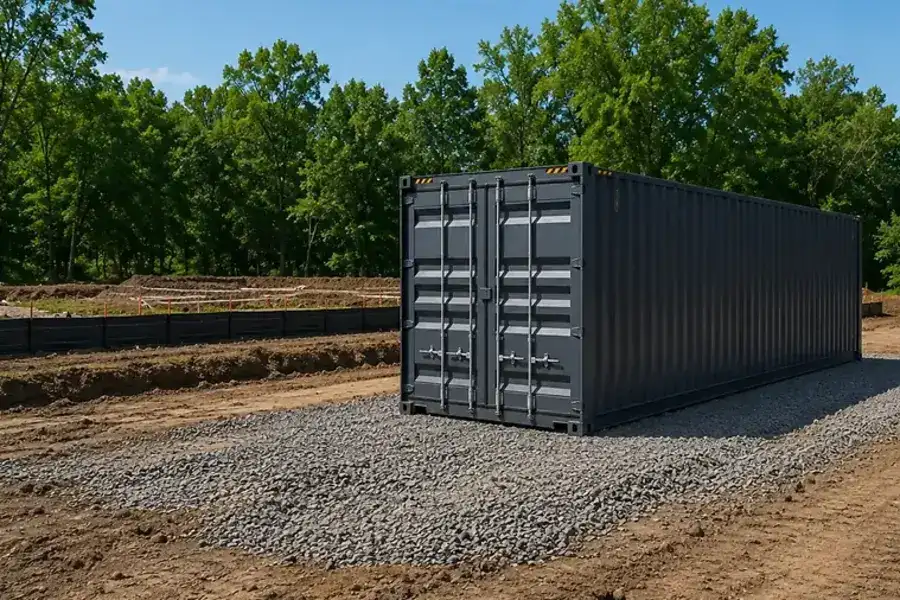
CMG Containers recommends placing the unit on dry and level ground. The surface should be firm enough to support both the container and the delivery operation. Avoid muddy soil, recently filled areas, loose material, standing water, and low spots where runoff collects. Conditions should be checked again after heavy rain because a route that was usable earlier may have become soft.
Drainage matters beyond the delivery itself. Water should move away from the container rather than pool around its base or directly in front of the doors. When evaluating level ground for shipping container placement, look at the surrounding grade as well as the immediate footprint. A visibly flat patch may still receive water from higher areas nearby.
Plan the Container Foundation Preparation
The appropriate base depends on the property, soil, expected length of use, local requirements, and the condition of the existing surface. Some sites may use a properly compacted aggregate area, while others may require concrete, asphalt, engineered supports, or another prepared base. Ask the container provider or a qualified site professional which option fits the location instead of relying on loose, improvised blocking.
Container foundation preparation should create stable, even support without trapping water. Before delivery, verify the surface with suitable leveling equipment and correct noticeable high or low points. A small amount of extra work at this stage is far easier than trying to reposition or re-level a loaded container later.
Clear the Delivery Route and Placement Area
Remove Trees, Debris, and Everyday Obstacles
Walk the complete route from the public road or site entrance to the placement point. Remove construction debris, pallets, tools, parked vehicles, temporary fencing, stored materials, and other obstacles. Trim or remove branches that extend into the route, and make sure gates can open fully. The drop zone itself should also be empty, not merely the exact container footprint.
On an active job site, coordinate with crews so the route remains clear when the truck arrives. A path prepared the previous afternoon can easily be blocked by a forklift, material delivery, dumpster, or contractor vehicle the next morning. Assign one person to check the route and control nearby traffic before installation begins.
Keep Clear of Power Lines and Overhead Hazards
Look upward during the site inspection. The delivery path and unloading area must be free of power lines and other overhead obstructions. Also check for low branches, building overhangs, signs, cables, lights, and temporary site wiring. A driver may need vertical clearance while transporting, positioning, or unloading the unit.
Do not assume that a line is high enough or safe to pass beneath. If power lines are present near the proposed route or placement area, stop planning around them and discuss an alternative with the delivery company. Any necessary coordination with the utility owner should happen before the truck is dispatched, not after it reaches the site.
Confirm Clearance for the Delivery Truck
Inspect Width, Turns, and Surface Conditions
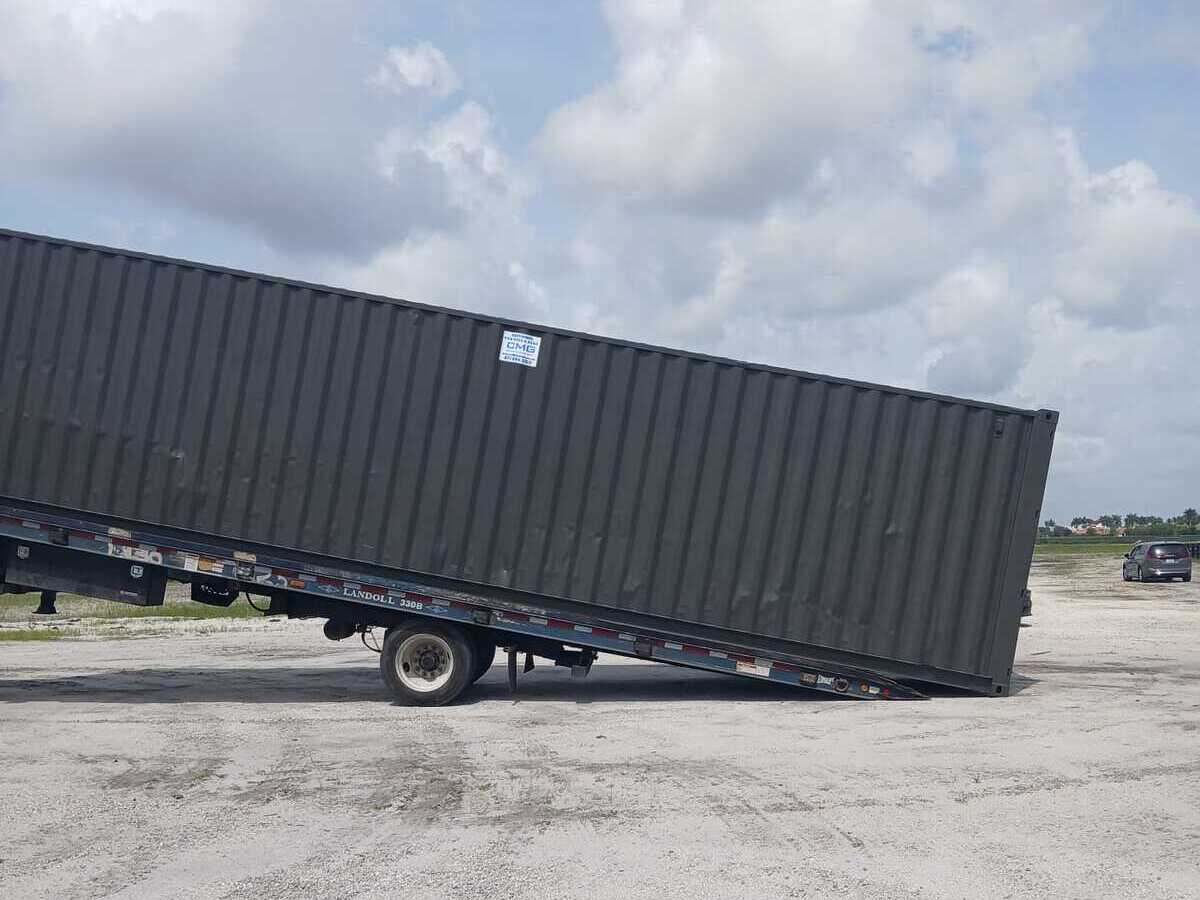
Delivery equipment needs substantially more maneuvering space than the container alone. Check entrance and gate width, tight corners, narrow driveways, curbs, ditches, slopes, and roadside conditions. Make sure the truck can approach without driving across septic areas, landscaping, unsupported pavement, or other surfaces that may be damaged.
Truck dimensions and unloading methods vary, so avoid guessing at exact clearance requirements. Share photos, measurements, access instructions, and known restrictions with CMG Containers before delivery. The provider can determine whether the route and setup are appropriate for the equipment assigned to the job.
Leave Room to Align, Unload, and Exit
The driver needs a clear approach to the final position and a practical way out after the container is set down. Avoid dead-end areas where the truck cannot straighten or leave. Keep people, personal vehicles, and operating machinery outside the unloading zone. Only the designated site contact should direct the driver, and that person should remain in a visible, safe location.
Check Utilities, Permissions, and Site Rules
Before grading, excavating, installing supports, or changing drainage, identify underground utilities and follow the applicable local process for marking them. Review property boundaries, easements, lease restrictions, zoning requirements, and permit rules that may affect shipping container placement. Requirements vary by location and by how long the container will remain on-site.
Construction sites and managed facilities may have additional procedures, including gate access, security check-in, personal protective equipment, delivery-hour limits, or traffic-control plans. Provide those instructions in advance so the driver does not arrive without the information or access needed to complete the delivery.
Final Checklist Before Installing a Shipping Container
Use this checklist shortly before the scheduled installation:
- The final location is clearly marked, and the door direction is confirmed.
- The ground is dry, level, firm, and free of standing water.
- The selected base or foundation has been completed and checked.
- Trees, branches, debris, vehicles, tools, and materials are out of the route.
- No power lines or other overhead hazards cross the approach or unloading area.
- The truck has enough room to enter, turn, align, unload, and exit.
- The site contact is available and understands the final placement plan.
Recheck these conditions on delivery day, especially after rain or ongoing site activity. If access, soil conditions, or the placement area has changed, notify CMG Containers before the truck arrives. Early communication gives the team a chance to review alternatives and helps prevent an unsuccessful delivery attempt.
A Prepared Site Makes Installation Simpler
Successful container installation is mostly decided before the truck reaches the property. Dry and level ground supports stable placement. A route without trees, debris, parked equipment, or power lines allows the driver to work safely. Adequate clearance keeps the delivery process controlled rather than improvised.
CMG Containers can help customers review practical delivery and placement needs before installation. Share accurate site details, prepare the ground, and keep the full route clear. With those steps completed, the container can be positioned where it is useful, accessible, and ready to support the work ahead.