
In logistics, speed is rarely just about how fast something moves—it’s about how smoothly it moves. Delays during loading and unloading create bottlenecks, increase labor hours, and disrupt carefully planned workflows. When cargo must move in and out frequently, container design plays a much bigger role than many realize. This is where double door shipping containers become a strategic advantage rather than a simple variation.
By offering access from both ends, these containers remove one of the most common inefficiencies in storage and transport: restricted entry. Also known as tunnel containers or two door shipping containers, they are engineered to streamline cargo handling, reduce congestion, and improve overall operational flow. Their design may appear simple, but the productivity gains they enable can be significant in high-demand environments.
What Are Double Door Shipping Containers?
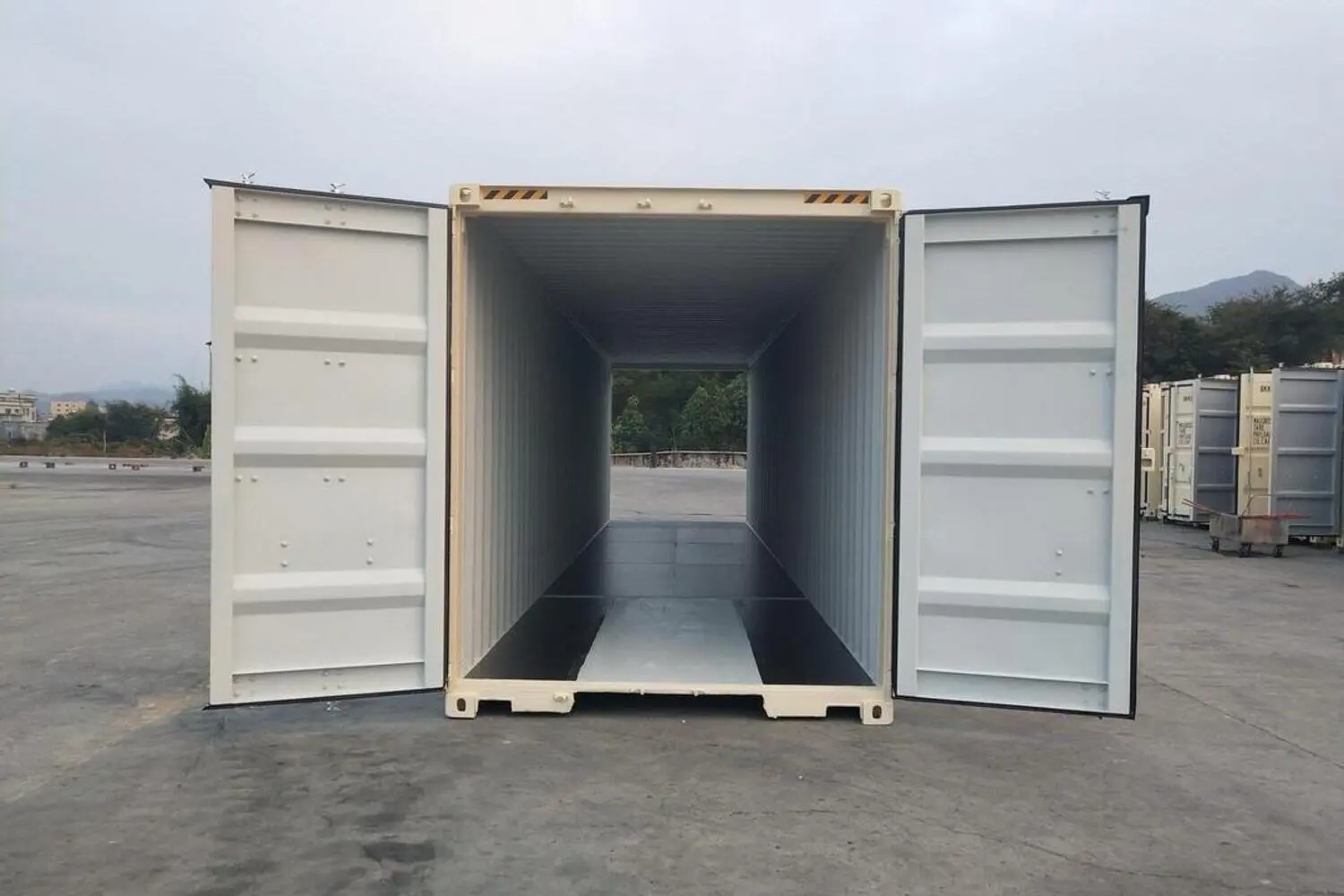
Before examining their benefits, it helps to clearly define what sets double door containers apart. These units are built with a full set of cargo doors on both ends, allowing entry and exit from either side of the container’s length.
Structurally, they are comparable to standard ISO containers in terms of strength and durability. The addition of a second door system does not compromise their stability; instead, the frame is reinforced to ensure long-term performance. This means businesses can enjoy dual-end access without sacrificing security or transport compatibility.
Core Structural Features
- Full cargo doors on both ends
- Reinforced steel frame to maintain structural integrity
- Secure multi-point locking systems
- Weather-resistant rubber seals
- Compatible with standard container handling systems
The straight-through design allows the interior to function like a passage rather than a closed box. That distinction becomes especially important in environments where speed and access matter daily.
The Main Advantage: Dual-End Access
The defining feature of double door shipping containers is the ability to open both ends simultaneously. While this may sound like a small modification, it fundamentally changes how cargo flows.
With single-door containers, everything must move in and out of one entry point. This creates natural congestion and often forces workers to reposition materials simply to reach items at the back. Dual-end access removes that bottleneck.
Why Dual Access Improves Efficiency
- Enables straight-through loading and unloading
- Reduces congestion around a single door
- Allows two teams to work simultaneously
- Improves airflow and visibility during operations
In high-volume environments, even small reductions in handling time per load can accumulate into substantial productivity gains over weeks and months.
Faster Loading and Unloading in Practice
Speed is not just theoretical—it directly impacts project timelines and labor budgets. Double door shipping containers reduce the physical obstacles that slow teams down.
For example, forklifts can enter from one end and exit from the other without reversing out of the same doorway. This smooth flow minimizes maneuvering time and lowers the risk of accidents caused by tight turns.
Practical Operational Benefits
- Reduced forklift repositioning
- Shorter dwell times at loading docks
- Lower risk of pallet damage
- Faster container turnover
In warehouse settings, faster turnover means more loads handled per day. On construction sites, it means less waiting for materials and smoother coordination between crews.
Tunnel Containers and Straight-Through Cargo Flow
The nickname tunnel containers reflects their most powerful advantage: continuous flow. Instead of functioning as a dead-end storage unit, the container becomes a channel through which goods move.
This design is especially valuable for sequential operations. Materials can be loaded from one side while older stock exits from the other, supporting better inventory rotation.
Ideal for FIFO Systems
- Construction materials that must rotate
- Event equipment staging
- Seasonal inventory management
- Temporary warehousing solutions
For businesses that rely on first-in, first-out (FIFO) practices, tunnel containers help maintain order without constant rearrangement.
Improved Organization and Inventory Management
When cargo can be accessed from both ends, internal layout planning becomes more flexible. Instead of stacking based on what was loaded first, teams can organize based on frequency of use or priority.
This reduces the need to unload multiple pallets simply to reach one item positioned at the back.
Organizational Improvements
- Clear zoning inside the container
- Faster inventory checks
- Simplified inspection processes
- Better separation of materials or tools
In environments where inventory accuracy matters, improved visibility and access translate directly into operational confidence.
Double Door Containers vs Standard Containers
Understanding the comparison helps determine when two door shipping containers are the smarter investment.
Standard Containers
- Single access point
- Strict loading sequence required
- Slower back-end retrieval
- Higher labor involvement for rearranging
Double Door Shipping Containers
- Dual access points
- Straight-through cargo flow
- Reduced handling complexity
- Greater staging flexibility
While standard containers remain suitable for sealed transport, double door containers outperform them in active-use environments.
Industries That Benefit Most
Different sectors experience different operational pressures, but dual-end access supports efficiency across multiple industries.
Construction and Infrastructure
Construction teams often work with materials that arrive in batches and must be used in sequence. Dual-door containers allow materials to be staged logically and retrieved without disassembling the entire load.
Warehousing and Distribution
In warehouse environments, time lost per load adds up quickly. Faster unloading improves dock efficiency and supports tighter scheduling.
Retail and Event Logistics
For temporary retail or event setups, tunnel containers simplify both installation and breakdown by enabling organized entry and exit flow.
Agriculture and Equipment Storage
Farm equipment and seasonal tools often need to be accessed from whichever side is most convenient. Dual-end access reduces unnecessary movement.
Double Door Containers for Sale: Long-Term Value
If you’re exploring double door containers for sale, long-term operational needs should guide the decision.
Owning a container becomes financially beneficial when it’s used frequently or modified for specialized purposes. Businesses that rely on continuous loading cycles or active staging operations often see strong returns on investment.
When Purchasing Makes Sense
- Permanent job sites
- Frequent loading cycles
- Custom interior installations
- High-volume warehouse operations
Ownership allows full control over layout and customization without recurring rental fees.
Renting Tunnel Containers for Flexible Operations
For temporary or seasonal needs, renting tunnel containers can provide the same efficiency benefits without long-term commitment.
When Renting Is Ideal
- Short-term construction projects
- Seasonal inventory peaks
- Event-based operations
- Temporary overflow storage
Rental options allow businesses to scale quickly while maintaining operational efficiency.
Security and Structural Strength
Adding a second set of doors does not weaken the container. In fact, double door shipping containers are reinforced to ensure that structural integrity remains intact.
Heavy-duty locking systems and steel frames provide the same level of protection expected from standard units.
Security Highlights
Locking bars on both door sets
Reinforced door hinges
Weather-resistant sealing systems
Durable steel construction
When secured properly, these containers are built to withstand both environmental and physical stress.
Customization and Conversion Possibilities
The straight-through layout also expands modification possibilities. Because both ends open, airflow and movement inside the container improve, making it suitable for more than storage.
Popular Modifications
- Portable workshops
- Tool and equipment staging areas
- Temporary offices
- Climate-controlled storage units
- Retail or display conversions
The dual-door configuration increases usability and flexibility across different operational scenarios.
Transportation and Placement Considerations
Despite their enhanced access, double door containers remain fully compatible with standard transportation systems.
They can be moved via truck, rail, or ship and handled using conventional equipment. Placement planning should simply account for sufficient clearance at both ends for door operation.
Because the container maintains ISO dimensions, it integrates seamlessly into existing logistics networks.
Long-Term Cost Efficiency
While double door shipping containers may have a slightly higher upfront cost, their operational efficiency often compensates for that difference.
Reduced loading times, lower labor requirements, and improved workflow coordination contribute to measurable savings over time.
Where Cost Savings Accumulate
- Faster loading cycles reduce labor hours
- Improved cargo flow increases daily throughput
- Reduced material handling lowers equipment wear
- Better organization decreases damage risk
For high-activity environments, the cumulative financial benefits can be substantial.
Access Is Operational Leverage
Efficiency is rarely about adding more space—it’s about using existing space more intelligently. Double door shipping containers offer that intelligence through design.
By enabling dual-end access, smoother cargo flow, and faster loading and unloading, tunnel containers provide a meaningful operational upgrade. For businesses that depend on speed, organization, and flexibility, two door shipping containers are not just convenient—they’re strategic.