
Choosing between different types of shipping containers might seem simple—until you actually need one. That’s when details like access, layout, and usability stop being “nice to have” and start becoming the whole point.
If your focus is easy access storage, the decision usually comes down to two main options: standard containers or open side units. Both are durable and reliable, but how you interact with them day-to-day is where the real difference shows up.
Understanding Standard Shipping Containers
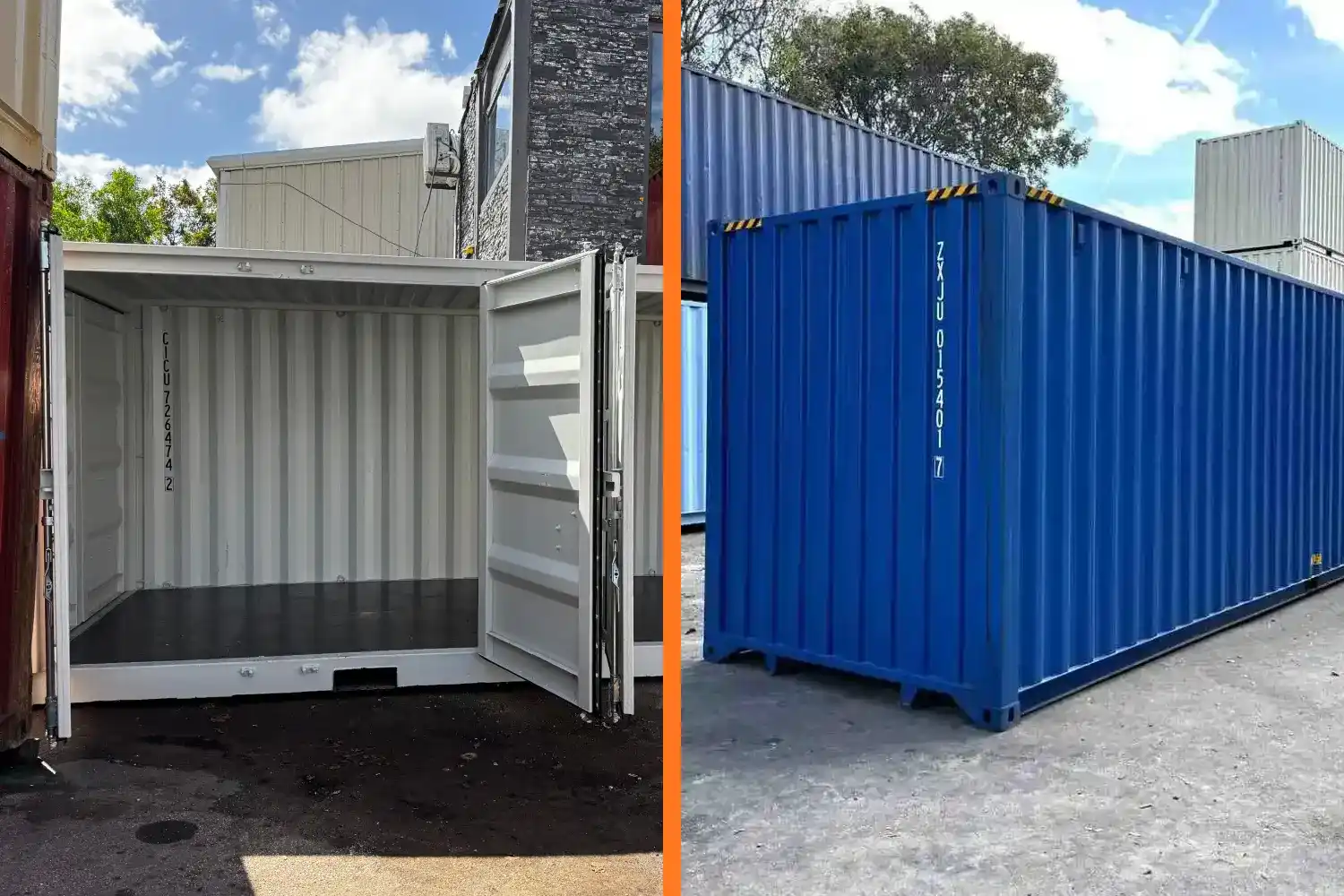
Standard containers are the classic choice. They come with double doors on one end and a fully enclosed structure designed for security and durability.
They’re built for transport first—and they do that extremely well.
But access is limited to a single entry point. If you’ve filled the container front to back, reaching something in the middle can turn into a small logistics project of its own.
That’s why standard containers work best when:
- Access is occasional rather than constant
- Items are stored long-term
- Loading and unloading happen in planned stages
For straightforward storage, they’re reliable and efficient. Just not always convenient.
What Are Open Side Shipping Containers?
Open side shipping containers are designed to solve one specific problem: access.
Instead of relying only on end doors, these units open along the side, making it easier to reach, organize, and move items without shifting everything around.
They are typically available in two configurations:
- Fully open side with folding doors
- Models with two side doors
In both cases, the goal is the same—turning the container into a space you can actually work with, not just store into.
Why Access Changes Everything
Storage isn’t just about how much you can fit—it’s about how easily you can use what’s inside.
With standard containers, space tends to get used in a straight line. With open side containers, it becomes more flexible and accessible.
That difference shows up in real ways:
- Faster loading and unloading
- Easier organization by sections
- Less time wasted moving things around
It’s one of those upgrades that seems minor until you’ve used it—then it’s hard to go back.
Open Side Containers for Sale: When They Make More Sense
If you’re searching for open side containers for sale, you’re probably already dealing with access limitations.
These containers are a strong fit when:
- You need regular, repeated access
- Inventory changes frequently
- The container is part of daily operations
- You’re using it as more than just storage
They’re especially useful for construction sites, events, retail setups, and mobile workspaces—any situation where convenience matters as much as capacity.
A 40ft HC open side container takes that further by adding extra height and length, creating a space that’s easier to move around in as well as store within.
Where Standard Containers Still Win
Open side containers aren’t automatically the better option. They’re just better for specific situations.
Standard containers still make more sense when:
- Storage is long-term and mostly untouched
- Security and structural simplicity are priorities
- The container will be transported frequently
- Budget is a key factor
They’re simpler, more widely available, and often more cost-effective. For many use cases, that’s exactly what’s needed.
Comparing Open Side and Standard Containers Side by Side
Sometimes the easiest way to decide is to look at how they behave in practice.
Access:
- Standard containers: Entry from one end only
- Open side containers: Side access across the container length
Organization:
- Standard containers: Linear and deeper stacking
- Open side containers: Section-based, easier to navigate
Flexibility:
- Standard containers: Best for static storage
- Open side containers: Better for active use
Cost:
- Standard containers: Generally lower
- Open side containers: Higher due to added functionality
Use Cases:
- Standard containers: Shipping, long-term storage
- Open side containers: On-site operations, retail, accessible storage
It’s less about which one is better—and more about which one fits your workflow.
How Open Side Containers Improve Workflow on Active Job Sites
On busy job sites, time isn’t just money—it’s momentum. Every extra minute spent digging through a container or rearranging materials slows everything down.
This is where open side shipping containers quietly outperform standard units.
Instead of treating the container like a deep storage tunnel, teams can:
- Access tools and materials from the side without unloading everything
- Organize equipment based on frequency of use
- Reduce unnecessary handling and repositioning
Over time, that efficiency adds up. Less movement means fewer delays and a smoother daily workflow. In environments where speed matters, access becomes a built-in advantage rather than a workaround.
Space Utilization: It’s Not Just About Size
A common mistake is assuming that more space automatically means better storage. In reality, how you use that space matters more than how much you have.
Standard containers often end up being packed front to back, which works fine—until you need something buried in the middle.
With an open side storage container, space becomes more usable:
- Items can be arranged side-by-side instead of stacked deep
- Sections can be dedicated to specific tools or materials
- Access doesn’t depend on unloading half the container
Even within the same dimensions, usability shifts dramatically. It’s not about how much fits—it’s about how easily you can reach it.
Long-Term Flexibility and Future Use
One thing people rarely think about when buying a container is what happens after the initial use.
Projects evolve, storage needs change, and what worked at the beginning might not make sense later on.
Open side containers offer more flexibility in that sense. They’re easier to:
- Convert into workspaces or semi-open units
- Adapt for retail or display use
- Reorganize as needs shift
A 40ft HC open side container can start as storage and later function as a usable workspace without major structural changes.
Standard containers can still be modified, but they often require more planning—and more compromise.
The Role of Side Opening Shipping Containers in Modern Projects
As projects become faster and more flexible, storage solutions have had to keep up. That’s where side opening shipping containers have started to stand out.
They’re no longer just a niche option. They’ve become a practical choice for industries that rely on quick access and efficient movement of materials.
And once access becomes part of your daily routine, it stops being a feature—and starts being a requirement.
Are Open Side Storage Containers Worth It?
This usually comes down to usage.
If your container is something you:
- Open multiple times a day
- Use as part of a workflow
- Need quick access to
Then an open side storage container earns its place.
If it’s more passive—loaded once and left alone—then a standard container may do the job just fine.
A Quick Note on Access Configurations
You might also come across containers described as having doors on both ends. In the industry, these are known as double door containers—sometimes informally referred to as dual-end units—but the idea is simply to improve accessibility from more than one point.
It’s a different approach than side access, but built around the same goal: making storage easier to work with.
Choosing Without Overcomplicating It
At some point, the decision becomes less technical and more practical.
Ask yourself:
- How often will I need access?
- Do I need visibility across the whole container?
- Is this storage, transport, or workspace?
Your answers will usually point you in the right direction.
Access vs Simplicity
Standard containers are simple, reliable, and cost-effective. They’ve been doing their job for decades—and doing it well.
Open side containers add flexibility, visibility, and ease of use. They’re built for situations where access matters just as much as storage.
If your priority is easy access storage, open side containers offer a clear advantage. If not, standard containers still do exactly what they’re meant to do.
The better choice isn’t about features—it’s about how you actually plan to use it.