
If one door is good, two doors—placed exactly where they should be—can completely change how a container works. Double door containers for sale, often called tunnel containers, are designed for operations that demand speed, access, and flow. They are not a gimmick, and they are not just “standard containers with extra doors.” Structurally and operationally, they solve very specific problems that single-door containers simply can’t.
This guide breaks down what double door shipping containers are, where they excel, which size makes sense, and what you should actually check before buying—without pretending they’re the right solution for everyone.
What Is a Double Door (Tunnel) Container?
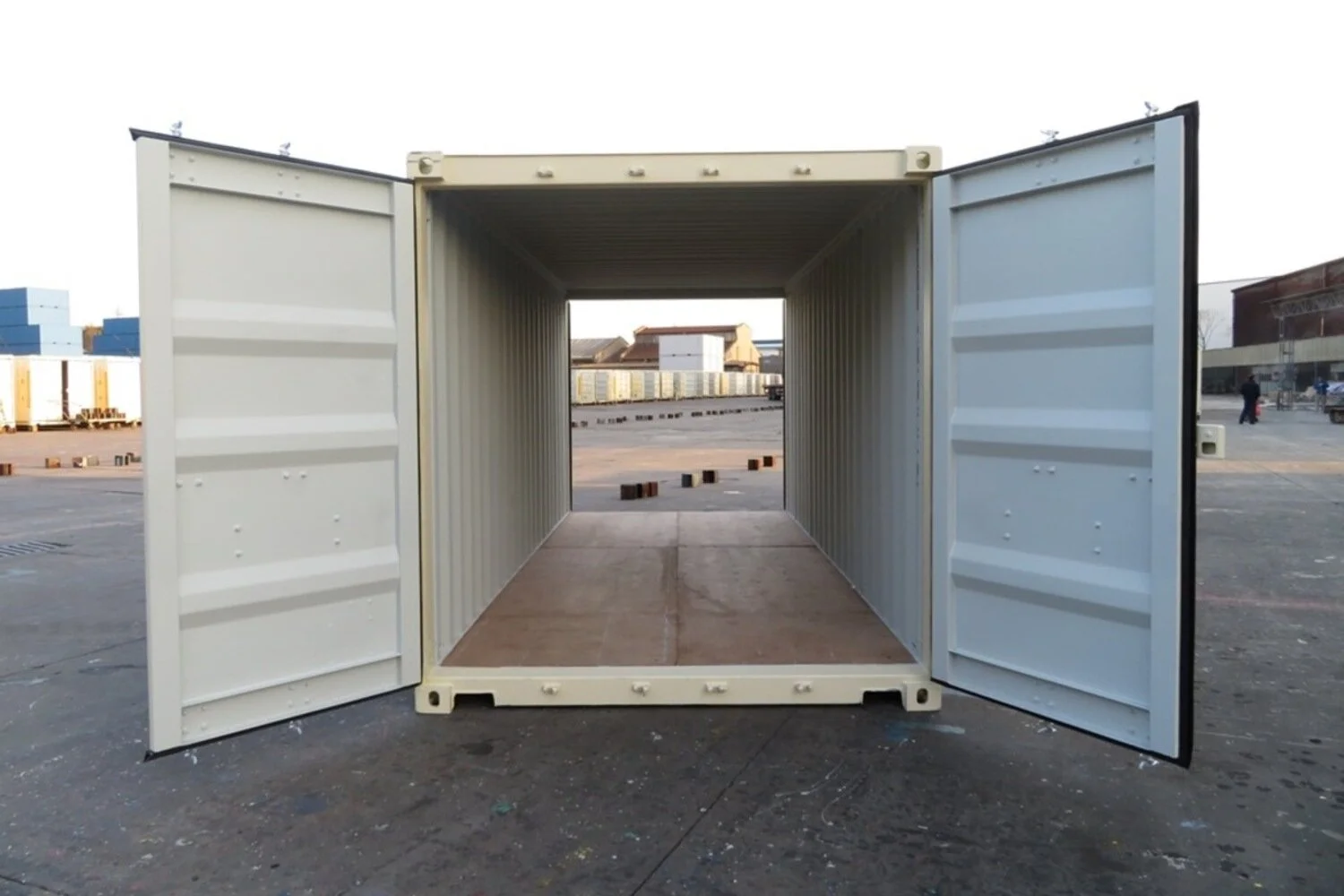
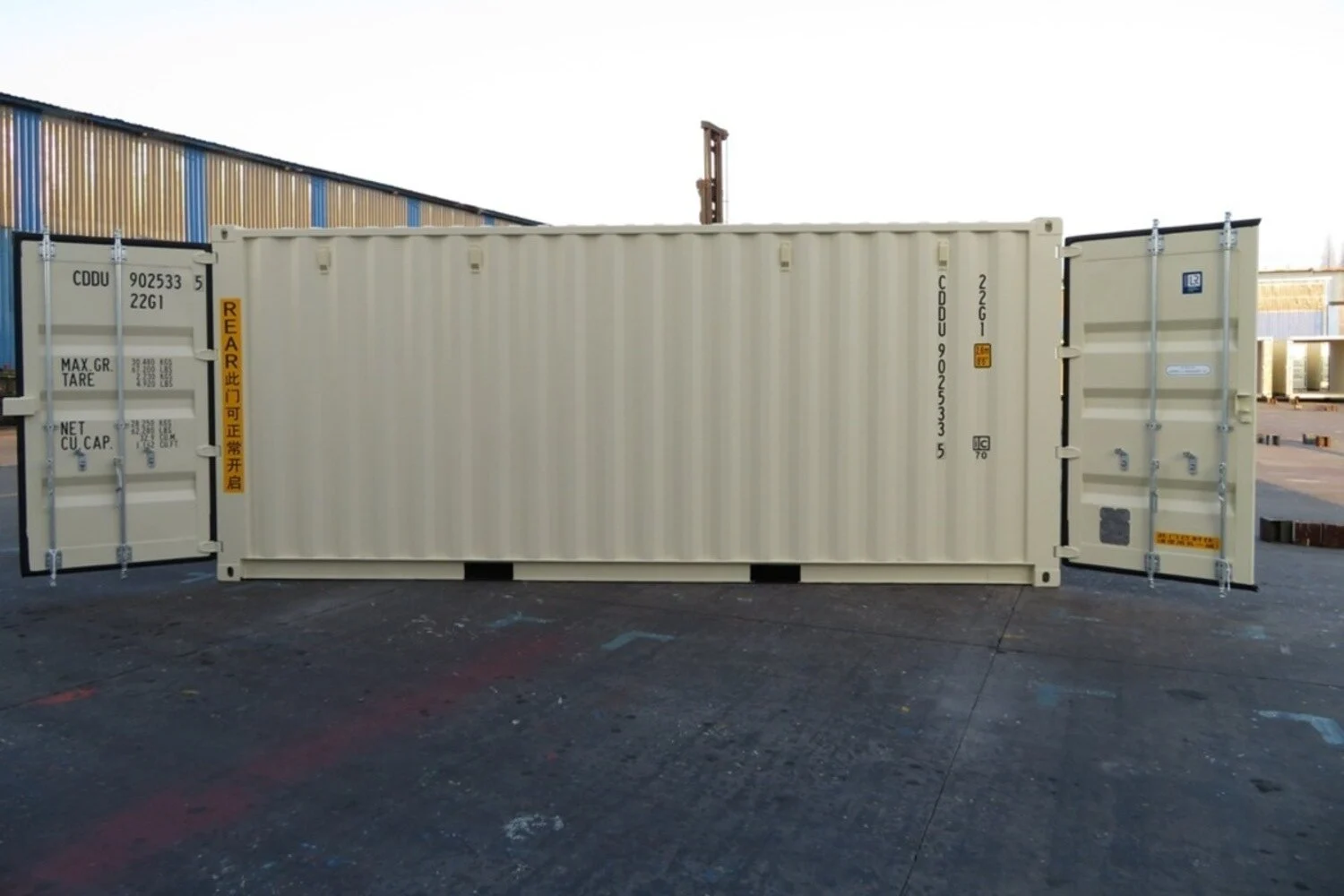
A double door container, also known as a tunnel container, features full-sized cargo doors at both short ends of the unit. Unlike standard containers, which open only from one side, tunnel containers allow straight-through access from end to end.
Think of them less as boxes and more as controlled passageways for goods.
Core Design Features
- ISO-standard steel construction
- Full locking cargo doors on both ends
- Reinforced frame to support dual-door integrity
- Available in 20ft double door containers and 40ft double door containers
Despite the added doors, tunnel containers maintain structural strength when built correctly—this is not a DIY modification scenario.
Why Double Door Containers Exist (And Why They’re Not Overkill)
Tunnel containers solve problems that show up only after operations scale. When access speed, inventory rotation, or workflow efficiency starts to matter, single-door containers quickly reveal their limits.
Key Operational Advantages
- Drive-through or pass-through access
- Faster loading and unloading
- Reduced manual handling
- Improved inventory control
- Better ventilation options
They are built for movement, not storage inertia.
Most Common Double Door Container Uses
Not every use case needs dual access—but when it does, the difference is immediate.
1. High-Turnover Warehousing and Logistics
In logistics environments, time is currency. Double door container uses here include:
Loading from one side, unloading from the other
FIFO (first in, first out) inventory systems
Temporary warehouse corridors
Tunnel containers function like modular loading lanes, especially when positioned between docks or yard zones.
2. Construction Sites and Industrial Operations
On busy sites, backtracking costs time and increases risk. Double door shipping containers allow:
Entry from one side, exit from the other
Organized tool and material zones
Safer workflow without congestion
This is especially valuable for long materials, power tools, or consumables used daily.
3. Retail, Exhibitions, and Event Installations
Tunnel containers are often used as:
Walk-through retail spaces
Exhibition tunnels
Crowd-controlled display units
The dual-door layout improves visitor flow and reduces bottlenecks—something single-door containers struggle with in public-facing setups.
4. Agricultural and Food Storage Applications
For non-refrigerated agricultural storage, tunnel containers offer:
- Better airflow
- Easier bulk handling
- Cleaner rotation of goods
While they don’t replace reefers, they support dry storage and distribution effectively.
5. Modified and Multi-Zone Containers
Tunnel containers are popular starting points for:
- Container workshops with defined entry/exit
- Mobile classrooms
- Equipment inspection tunnels
- Modular production lines
Two doors mean you can divide functions logically instead of stacking them.
20ft vs. 40ft Double Door Containers: How to Choose
The choice isn’t about size alone—it’s about flow.
20ft Double Door Container
Best suited for:
- Compact sites
- Short-distance material movement
- Equipment access rather than bulk storage
Advantages:
- Easier transport and placement
- Lower upfront cost
- Faster handling in tight spaces
If your operation values maneuverability over capacity, 20ft makes sense.
40ft Double Door Container
Best suited for:
- High-volume storage and movement
- Warehousing and logistics lanes
- Walk-through retail or exhibitions
Advantages:
- Maximum usable interior length
- Ideal for zoning and segmentation
- Better cost efficiency per square foot
For continuous flow operations, 40ft tunnel containers are often the clear winner.
Double Door Containers vs. Standard Containers
Here’s where tunnel containers clearly separate themselves.
Access
- Standard: One entry point, backtracking required
- Double Door: Two entry points, straight-through movement
Workflow
- Standard: Load, stack, unload in reverse
- Double Door: Load one side, unload the other
Organization
- Standard: Limited visibility and access
- Double Door: Easier zoning and rotation
If your workflow involves movement, not just storage, tunnel containers outperform.
Benefits That Matter in Real Operations
Forget marketing language—these are the benefits operators actually notice.
- Faster Turnaround
Dual doors reduce idle time during loading and unloading.
- Reduced Labor Strain
Less dragging, lifting, and repositioning of goods.
- Improved Safety
Clear entry and exit points lower congestion and accidents.
- Better Inventory Control
You can see, access, and rotate goods logically.
What to Look for Before Buying Double Door Containers for Sale
This is where smart buyers separate themselves from regret buyers.
1. Door Alignment and Hardware Quality
Check for:
- Smooth door operation
- Heavy-duty hinges
- Fully functional locking bars
Misaligned doors are a red flag, not a minor issue.
2. Structural Integrity
Because both ends are openable, the container must be properly reinforced. Inspect:
- Corner posts
- Roof rails
- End frames
If reinforcement is weak, structural fatigue follows.
3. Floor Condition
Tunnel containers often see heavy traffic. Look for:
- Solid marine-grade plywood flooring
- No soft spots near door thresholds
- Even wear patterns
Floor damage spreads fast under repeated movement.
4. Weather Sealing
Two doors mean twice the sealing responsibility. Confirm:
- Intact gaskets
- No daylight through door edges
- Proper water resistance
Leaks don’t announce themselves politely.
5. New vs. Used Tunnel Containers
Used double door shipping containers can be cost-effective, but inspect more carefully than standard units:
- Door wear
- Frame warping
- Rust around door hardware
Savings disappear quickly if repairs pile up.
Common Misconceptions About Tunnel Containers
Let’s dismantle a few myths.
“They’re weaker than standard containers.”
Incorrect. Poorly built ones are weaker. Properly reinforced tunnel containers are structurally sound.
“They’re only for transport.”
False. Many are used permanently on-site.
“They’re too expensive to justify.”
Only if your operation doesn’t benefit from flow. If it does, the ROI shows up fast.
Are Double Door Containers Worth It?
Choose double door containers for sale if your operation involves:
- Regular movement of goods
- Workflow optimization
- Through-access requirements
- Inventory rotation
Stick with standard containers if storage is static and access frequency is low.
Tunnel containers are tools, not upgrades for their own sake.
How Double Door Containers Improve Site Layout and Traffic Flow
One of the most overlooked advantages of double door shipping containers is how they shape physical movement around a site. When containers are placed strategically, tunnel-style access allows people, equipment, and materials to move through the unit instead of around it.
This improves:
- Site circulation and layout efficiency
- Forklift and pallet jack maneuverability
- Separation of entry and exit points
- Reduced congestion in high-activity zones
On construction sites, logistics yards, or temporary facilities, this straight-through design turns the container into an active part of the workflow rather than a static obstacle. In short, the container works with your layout, not against it.
Customization Options That Make Tunnel Containers Even More Functional
While double door containers for sale are powerful in their standard form, they’re also strong candidates for customization—especially when used beyond basic storage.
Common upgrades include:
- Interior shelving or racking for FIFO systems
- Lighting and electrical installations
- Ventilation for airflow-sensitive goods
- Interior partitioning for zoning
- Anti-slip or reinforced flooring for heavy traffic
Because access is available from both ends, modifications tend to stay usable long-term. You’re not locking yourself into a single entry logic, which makes tunnel containers more future-proof than standard single-door units.
Containers Should Follow Your Workflow
A container that forces your team to work around it is the wrong container. Double door shipping containers exist because real operations move forward—not backward.
Whether you opt for a 20ft double door container for compact efficiency or a 40ft double door container for full-scale flow, the value lies in alignment with how your operation actually functions.
When access, speed, and logic matter, tunnel containers stop being a “nice-to-have” and start being the obvious choice.