
If standard shipping containers feel like working through a mailbox slot, open side containers for sale are the industrial equivalent of tearing down a wall—on purpose. With full-length side access, these containers are designed for faster loading, easier organization, and flexible use across construction, warehousing, retail, and events.
This guide breaks down what open side shipping containers are, where they outperform traditional containers, and what you should check before buying—without the fluff and without pretending every container fits every job.
What Are Open Side Shipping Containers?
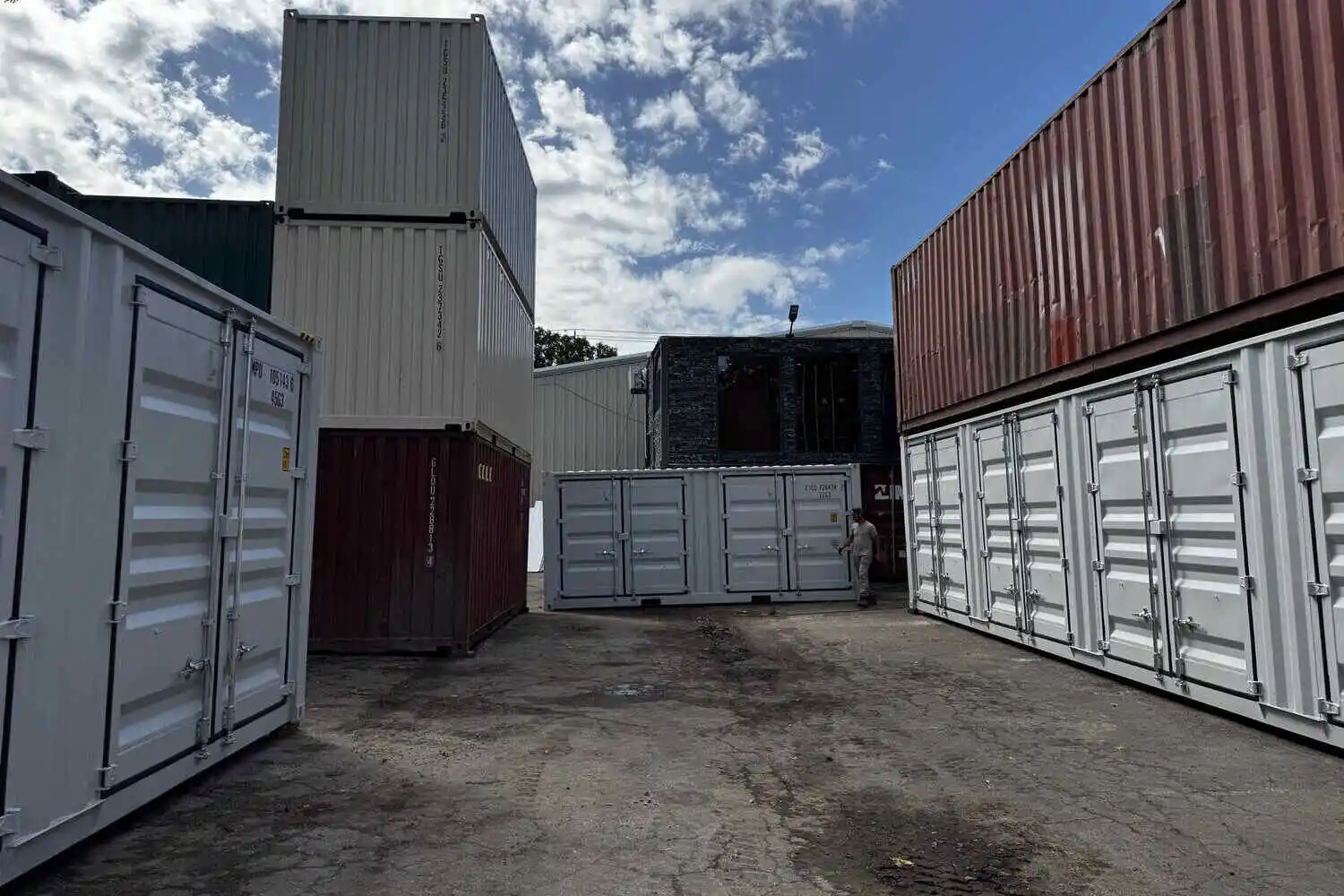
Open side shipping containers, also called side opening containers, feature large doors along one full side (or most of it), instead of only at the short end. These doors swing open to provide wide, unobstructed access to the container interior.
Structurally, they’re still ISO-compliant steel containers, but they’re reinforced to compensate for the large side opening—because cutting a wall out of a steel box without reinforcement is how you create expensive problems.
Key Characteristics
- Full-length or near full-length side doors
- Heavy-duty locking mechanisms
- Reinforced frame and roof structure
- Available in 20ft open side containers and 40ft open side containers
Why Open Side Containers Are in Demand
Open side containers aren’t a trend. They’re a response to inefficiency.
Traditional end-door containers work fine when you’re stacking pallets front to back and unloading everything at once. The moment you need selective access, fast turnover, or visual display, they slow you down.
Core Advantages at a Glance
- Faster loading and unloading
- Easier access to oversized or awkward items
- Better interior visibility and organization
- More flexible layout options
- Strong fit for non-shipping applications
Top Open Side Storage Container Uses
Open side containers shine in situations where access, speed, or layout flexibility matters more than pure transport efficiency.
1. Construction Sites and Industrial Storage
On active sites, time lost opening, digging through, and re-stacking containers adds up fast. Open side storage container uses here are obvious:
- Store long materials like pipes, beams, or panels
- Access tools without unloading everything
- Improve safety by reducing manual handling
They’re essentially jobsite storage that doesn’t fight back.
2. Warehousing and Logistics Operations
For short-term or overflow storage, side opening containers allow:
- Side-by-side pallet access
- Faster inventory rotation
- Clear visibility of stored goods
Instead of treating containers like sealed boxes, operations can treat them like modular warehouse aisles.
3. Retail, Pop-Up Shops, and Events
Open side shipping containers are a favorite for temporary retail and exhibitions because:
- The entire side can become a display wall
- Customer flow is more natural
- Interior feels open instead of claustrophobic
They work especially well for markets, festivals, and branded activations where visibility matters more than security during operating hours.
4. Equipment and Machinery Storage
Large or oddly shaped equipment doesn’t love narrow end doors. 20ft open side containers are often used to store:
- Landscaping equipment
- Generators and compressors
- Mobile workstations
Side access reduces damage risk during loading and unloading—both to the equipment and to whoever’s handling it.
5. Specialized or Customized Applications
Because of their structure, open side containers for sale are often chosen for:
- Modified workshops
- Container bars or cafes
- Exhibition units
- Mobile classrooms or demo units
They’re not always cheaper—but they are more adaptable.
20ft vs. 40ft Open Side Containers: Which Should You Choose?
Size matters, but only relative to your actual use.
20ft Open Side Container
Best for:
- Tight sites or urban locations
- Short-term storage
- Equipment access rather than bulk storage
Advantages:
- Easier to transport
- Lower upfront cost
- Faster setup
40ft Open Side Container
Best for:
- High-volume storage
- Retail or display-heavy uses
- Long materials or large inventory
Advantages:
- Maximum usable access
- Better for layout customization
- Fewer units needed for large operations
If you’re deciding purely on price per square foot, 40ft often wins. If maneuverability matters, 20ft usually makes more sense.
Benefits That Actually Matter (Beyond the Brochure)
Not all benefits are equal. Here’s what genuinely impacts daily operations.
· Operational Efficiency
Side access cuts down loading time and labor. That’s not marketing—it’s physics.
· Improved Safety
Less climbing, fewer awkward lifts, and reduced need to reach deep into containers.
· Space Optimization
You can organize inventory logically instead of stacking and hoping.
· Visual Access
Knowing what’s inside without unloading everything is underrated until you don’t have it.
What to Look for Before You Buy Open Side Containers for Sale
This is where mistakes get expensive.
1. Structural Reinforcement
Side openings weaken the container if not properly engineered. Check for:
- Reinforced roof rails
- Strengthened corner posts
- Solid door frames
If it looks flimsy, it probably is.
2. Door Hardware and Seals
You want:
- Heavy-duty hinges
- Secure locking bars
- Weather-tight seals
Poor door systems turn convenience into a maintenance nightmare.
3. Condition: New vs. Used
Used open side shipping containers can be cost-effective, but inspect carefully:
- Door alignment
- Rust around cut edges
- Floor condition near side opening
Side-door containers take more stress than standard units.
4. Compliance and Transport Needs
If you plan to move it:
- Confirm ISO compliance
- Check CSC certification if required
- Understand transport restrictions for side-door units
Not all modified containers travel equally well.
5. Customization Potential
If future modification is likely, think ahead:
- Electrical needs
- Interior lining
- Ventilation or insulation
- Flooring upgrades
Buying cheap and rebuilding later often costs more.
Common Myths About Side Opening Containers
Let’s clear a few things up.
“They’re weaker than standard containers.”
Not if they’re properly reinforced. Poor builds are weaker—good ones aren’t.
“They’re only for storage.”
False. They’re used for retail, workshops, and mobile spaces constantly.
“They’re not weatherproof.”
Bad seals leak. Good containers don’t. Simple as that.
Are Open Side Containers Worth the Investment?
If your operation requires:
- Frequent access
- Selective loading
- Visual organization
- Flexible layouts
Then yes—open side containers for sale often justify their higher upfront cost through time savings, reduced labor, and fewer headaches.
If you’re just stacking pallets once and forgetting about them for six months, a standard container will do fine.
Buy for How You Work, Not Just for Storage
Open side shipping containers exist because real-world operations don’t happen in neat, straight lines. They happen sideways, quickly, and under pressure.
Whether you’re choosing a 20ft open side container for equipment access or a 40ft open side container for retail or logistics, the right choice isn’t about trends—it’s about friction. The less your container slows you down, the better the investment.
And if a container makes your team curse less during unloading? That’s a measurable ROI, whether it shows up on a spreadsheet or not.