
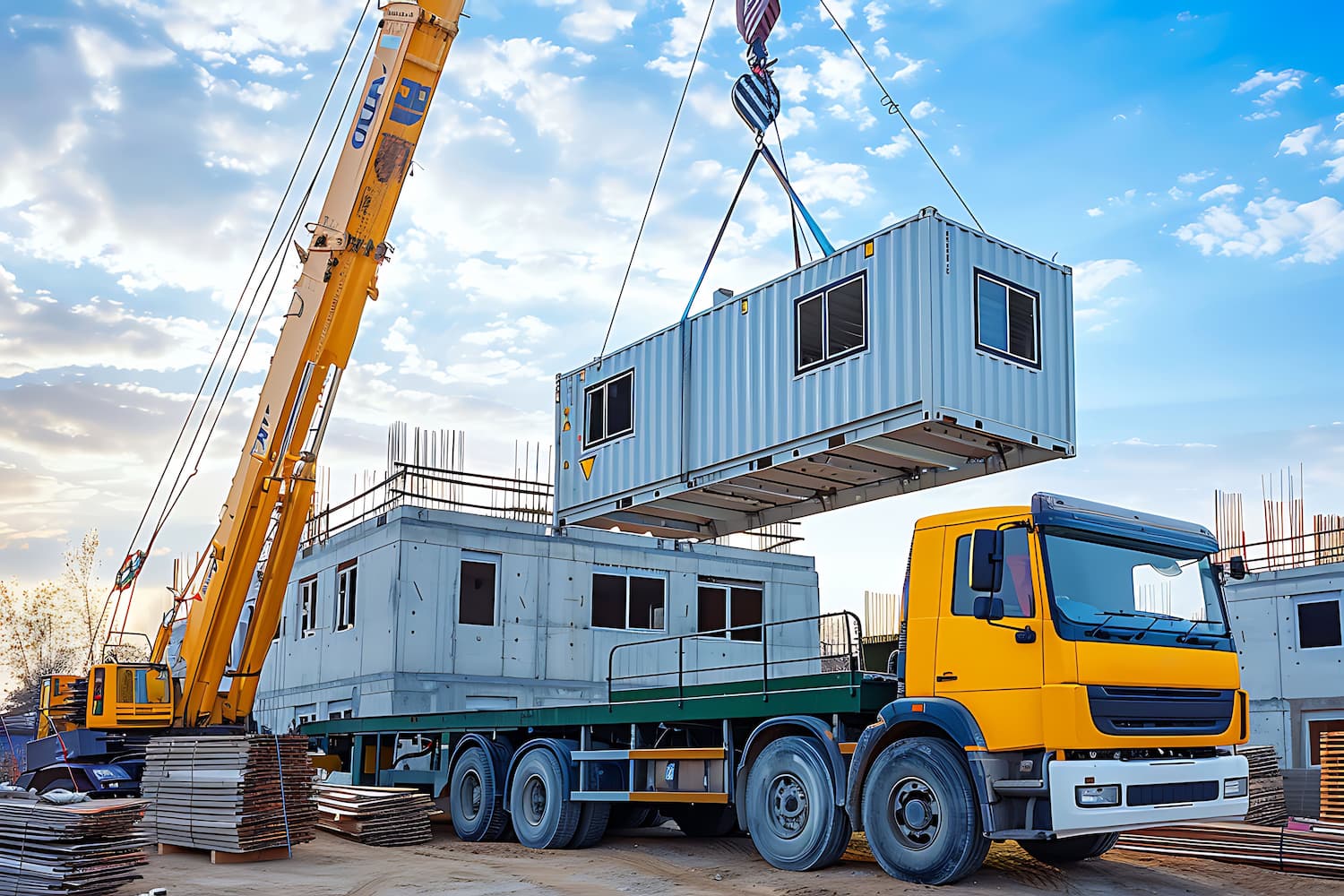
A construction site shipping container should do more than add storage space. It should fit the property, support the crew’s workflow, and make tools and materials easy to secure and retrieve. A unit that is too large, poorly placed, or equipped with the wrong doors can become a daily obstacle.
Choosing a shipping container should begin with the shape of the job site – not with the catalog. Where can the delivery truck reach? Which direction can the doors open? Will workers approach on foot, with carts, or by forklift? The answers help determine whether a standard used 20-foot container, a roll-up-door unit, an open-side container, or a double-door configuration is the right fit.
For most projects, renting a used container is practical. It provides temporary storage without paying a premium for a new unit that will immediately face dust, mud, scratches, and heavy use.
Start With the Shape and Traffic Flow of the Site
Construction sites are rarely empty rectangles. They contain access roads, fences, cranes, material stacks, dumpsters, trailers, utilities, and changing work zones. A container must fit into that system without blocking vehicles or creating a safety concern.
Identify a level placement area and map the delivery route. Check gates, tight turns, overhead lines, soft ground, and the space required to set the container down. Then consider how people and equipment will reach it. Standard cargo doors need room for two swinging door leaves. A roll-up door requires less exterior clearance. An open-side unit needs access along its long wall, while a double-door container works best when both ends remain reachable.
Think beyond delivery day. A convenient location during mobilization may be blocked after materials or temporary structures arrive. The best position keeps job site storage containers useful through every phase and reduces relocation risk.
Match the Container to What You Are Storing
Make a realistic inventory before comparing door styles. Hand tools, boxed supplies, safety equipment, and small machines usually fit well in a standard unit. Long materials, palletized products, or bulky equipment may need wider or multiple access points.
Access frequency matters too. Weekly-use supplies can sit deeper inside; tools retrieved several times a day should stay near the entrance or a side door. Consider whether one crew will control the unit or several trades will need separate zones.
The best shipping containers for construction sites reduce unnecessary handling. Workers should not unload half the container to reach one item at the back. A plan showing what goes in, where it sits, and how it comes out often reveals the correct configuration.
Compare the Main Door Configurations
Standard 20-Foot Container With Swinging Doors
The simplest and most frequently selected option is a used 20-foot container with two swinging cargo doors at one end. Its compact footprint, straightforward security, and useful capacity make it suitable for general tool and material storage.
This setup works well when the site has a clear approach to one end. Place daily-use equipment near the doors and lower-priority supplies toward the back. Shelving and labeled floor zones can make this basic configuration highly efficient.
Here, “two doors” means the paired cargo doors on one end. It is different from a true double-door or tunnel container, which has doors at both ends.
Container With a Roll-Up Door
A roll-up door is useful when crews need frequent access or when swinging doors would interfere with a narrow aisle, fence, parked equipment, or nearby structure. Because it opens vertically, it needs less exterior operating space.
A roll-up door can also provide side access when the container must sit parallel to the work area. That layout lets crews reach high-use items without walking through the full unit and can divide the interior into practical storage zones.
Door placement should follow the site plan. A side opening loses its advantage if it faces a barrier or a future traffic lane.
Open-Side Container
An open-side container provides access through much or all of one long wall. It is a strong choice when workers need to load bulky items from the side, reach several storage positions directly, or avoid arranging everything in a single line.
These construction storage containers work well for long materials, large equipment, palletized supplies, or high-turnover inventory. They require generous side clearance, however. Placing one against a fence or building defeats its main benefit.
Double-Door Container
A true double-door container has cargo doors at both ends. It suits long, narrow sites where materials can enter from one end and leave from the other. It also makes items stored deep inside easier to reach and can support first-in, first-out organization.
Both ends must remain accessible. When one end will eventually be blocked, a standard or side-access unit may offer better value.
Choose the Right Length Without Overestimating
A larger container is not automatically better. Extra capacity matters only when the site can accept the footprint and the crew can use the interior efficiently. A 20-foot unit is often the construction default because it is easier to place and organize while meeting many temporary storage needs.
Estimate inventory at the busiest project stage, not just at setup. Include aisle space and safe access; a unit packed wall to wall may hold more but function poorly. Sometimes two smaller portable storage containers near separate work zones are more efficient than one large container at the site perimeter.
Rent Used Containers for Temporary Job-Site Use
Construction projects are temporary, and storage needs change as work progresses. Renting aligns the unit with the project schedule without creating long-term ownership, resale, or off-site storage responsibilities. Purchasing may suit a contractor with continuous repeat use, but it is uncommon for a single project.
For construction-site storage, CMG Containers supplies used rental units rather than new containers. This is intentional: a new container costs more and will quickly receive normal wear in a demanding environment. A serviceable used unit is better matched to mud, dust, shifting materials, and frequent loading.
Rental also allows the configuration to follow the current site. A project can select standard rear doors, a roll-up door, open-side access, or double-door access instead of owning one layout that may not suit the next job. Availability varies, so discuss access needs early.
Prepare the Placement Area Before Delivery
Even the right container can perform poorly on an unprepared site. Select firm, level ground with drainage that directs water away. Appropriate stable blocking beneath the corners may help keep the unit aligned and the doors operating correctly, depending on site conditions.
Confirm the delivery route and orientation before arrival. Mark which end or side must face the work area. Verify gate width, turning space, overhead clearance, surface strength, and delivery-hour restrictions. The project team should also check permits, setbacks, and fire-access rules with local authorities or site safety personnel.
Leave clear space for doors, workers, carts, and lifting equipment. Avoid blind corners and narrowed emergency routes. Choosing a shipping container is a storage decision; placing it is also a logistics and safety decision.
Plan Security and Interior Organization
Ask about suitable locking options and establish who controls access. Inside, use shelving, racks, bins, and marked zones to keep equipment off the floor and prevent unstable piles.
Store high-use items near the most convenient opening, keep heavy materials low, and maintain a walkable aisle. Do not block door mechanisms. A basic check-in process can also reduce lost tools and duplicate purchasing. The goal is not merely to fill the unit but to create a portable storage system that supports the crew.
A Practical Final Checklist
Before ordering a construction site shipping container, confirm the footprint, delivery route, door clearance, stored materials, access frequency, and rental period. Then match the door style to the workflow:
• Standard used 20-foot container: straightforward general-purpose storage.
• Roll-up door: frequent entry or limited door-swing space.
• Open-side container: bulky materials and direct side access.
• Double-door container: two accessible ends and through-flow organization.
The right unit is not necessarily the biggest or most modified option. It is the one that fits the site and removes wasted movement. Share a site plan, photos, access measurements, and a basic materials list with CMG Containers. The team can then recommend a used rental configuration that provides secure storage without getting in the way of the work.