
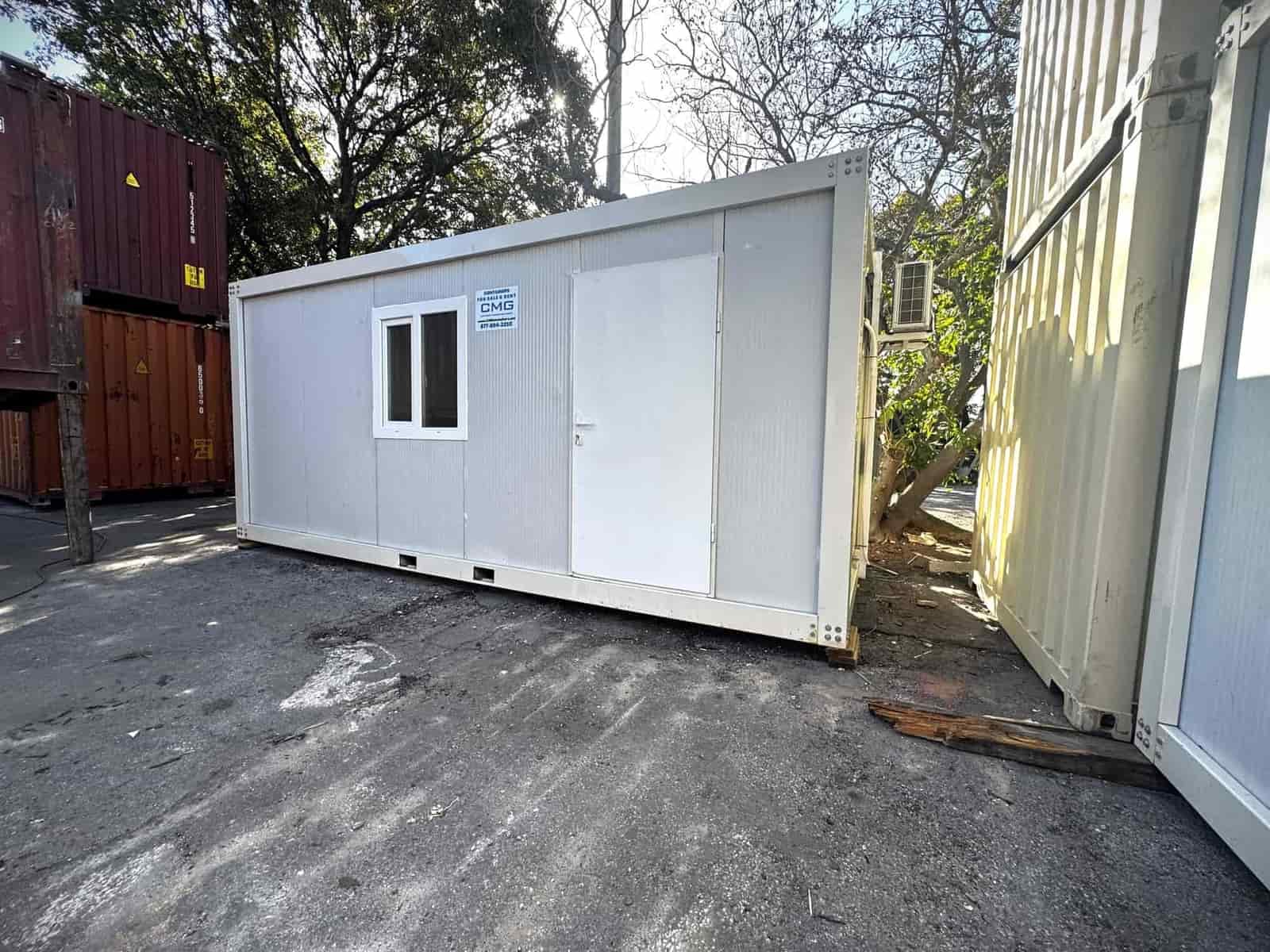
A temporary workplace should not feel like an afterthought. Project managers, supervisors, engineers, and administrative teams need a secure space to review plans, hold quick meetings, manage paperwork, and get out of the weather. 20’ Modular Offices provide that space in a compact format that can be delivered close to where the work is happening.
Unlike an empty storage unit, a modular office is prepared for people. CMG Containers can provide offices with electricity, insulation, air conditioning, and heating, along with a clean appearance and a bright interior. Once the unit is placed and the required site connections are handled, it is ready for daily use.
The right choice depends on placement, crew size, utilities, furniture, and project duration. This guide covers the key decisions before renting a 20-foot modular office.
Why a 20-Foot Modular Office Works for Many Sites
A 20-foot unit balances usable interior room with a manageable footprint. It can support focused work, storage, and small meetings without taking up the space required by a larger temporary building. It is also easier to position on sites where parking, material staging, and vehicle routes compete for every available foot.
That flexibility is a major advantage of a portable office container. The office can sit near an entrance, beside a materials yard, or close to the active work zone, provided the location is safe and accessible. Keeping decisions, documents, and communication near the project can reduce unnecessary trips to an off-site office.
Start With the Work the Office Must Support
Before comparing layouts, define what will happen inside the unit. A construction site office used by one superintendent has different requirements from a shared space for several coordinators. A quiet remote workspace may prioritize desk area and comfort, while a field office may need plan storage, equipment charging, and frequent visitor access.
Daily Project Management
For daily site management, the office should support computer work, calls, document review, and brief conversations with crew leaders or subcontractors. Plan where drawings, permits, safety forms, and delivery records will be stored. Keeping frequently used materials within reach prevents the office from becoming a paper-filled obstacle course.
Meetings and Shared Use
When several people will use the unit, circulation matters. Estimate the typical number of occupants rather than the largest crowd that might appear once a month. Large coordination meetings can happen elsewhere; the modular office should work comfortably during normal operations.
Remote and Administrative Work
A remote workspace container may serve as a satellite office, security station, check-in point, or temporary administrative room. In these uses, a bright interior and reliable temperature control matter because occupants may spend most of the day inside. The goal is a practical work environment, not merely shelter.
Plan the Placement Before Delivery
A modular office can go in many locations, but the site still needs a workable delivery route and a level, stable placement area. Review gates, tight turns, soft ground, fencing, overhead lines, underground utilities, parked equipment, and active traffic routes before delivery day.
Place the office where it supports the workflow without creating a bottleneck. A job site office container near the entrance can help manage visitors and deliveries; one near the work zone can improve communication with crews. The door should not open into vehicle traffic, and the unit must not block emergency access or future construction.
Plan for the entire project sequence. Materials, temporary utilities, cranes, and new structures can change access quickly, turning a convenient spot into an obstruction.
Understand the Ready-to-Use Features
The value of 20’ Modular Offices comes from the systems that turn a steel unit into a functional workplace. CMG Containers prepares these offices with core features for comfort and everyday productivity.
Electricity
Electrical service supports lighting, computers, printers, chargers, and standard office equipment. Before placement, confirm how power will reach the unit and whether the site supply suits the office and planned devices. Extension cords and improvised connections should not become the permanent electrical plan.
Insulation
Insulation helps moderate outdoor temperature changes and allows heating and cooling to work more effectively. It also gives the interior a more finished feel than an unmodified cargo container. For teams working through changing seasons, insulation is a practical necessity.
Air Conditioning and Heating
Air conditioning and heating keep the office usable in hot or cold conditions. Climate control supports comfort and concentration while helping protect paperwork and electronics from extreme temperatures. Performance will depend on local weather, occupancy, door use, and available power.
A Clean, Bright Interior
Temporary does not have to mean dark or rough. A clean look and bright interior make the office easier to organize and more welcoming for staff, clients, inspectors, and subcontractors. Good lighting also helps when reviewing drawings, completing forms, or checking schedules.
Build a Functional Container Office Setup
A successful container office setup begins with the most frequent tasks. Place the main desk where the user can work without blocking the entry. Keep filing, plan storage, and daily supplies nearby, and maintain a clear path from the door to each work area.
Furniture size matters in a 20-foot space. Compact desks, narrow cabinets, wall-mounted organization, and stackable seating usually work better than oversized residential furniture. Measure in advance; a few inches can determine whether a cabinet opens fully or two people can pass comfortably.
Plan computers, printers, chargers, and communication equipment before plugging everything in. Organized cords reduce clutter and tripping hazards. Keep muddy tools, fuel, chemicals, and bulky materials in dedicated storage rather than allowing them to take over the office.
Match the Office to Team Size and Project Duration
A 20-foot office is best for a focused team and clearly defined activities. One or two regular users may have room for desks, storage, and occasional visitors. A larger rotating group can use the space, but the layout should emphasize shared workstations or brief meetings rather than permanent desks for everyone.
Project duration matters. Longer assignments benefit from deliberate organization, while some sites need a separate storage container or additional office unit. One office does not have to solve every operational problem.
Questions to Answer Before Renting
A clear site plan and use plan make the selection process faster. Before scheduling a unit, confirm:
• Who will use the office, and how many people will be inside at the same time?
• Which daily tasks, meetings, and document-storage needs must it support?
• Where can the delivery truck enter, maneuver, and place the office safely?
• How will electrical service reach the unit?
• Will the location remain accessible through every phase of the project?
• Is a separate unit needed for tools, materials, or dirty equipment?
These answers help CMG Containers recommend a practical unit and placement approach. They also prevent choosing temporary office space by exterior size alone and discovering workflow problems after delivery.
Choose a Workspace Ready for the Real Job
20’ Modular Offices give job sites and remote teams a compact, comfortable place to manage work where it happens. With electricity, insulation, air conditioning, heating, a clean appearance, and a bright interior, the unit arrives prepared for productive use rather than as an empty shell.
The best result comes from matching those features to the site. Define the users and daily tasks, select a safe and accessible location, plan power in advance, and keep the interior focused on office work. CMG Containers can help choose and place a modular office that supports the project from setup through completion.