
Shipping container delivery is usually straightforward when the site is ready. The problems tend to happen when access is too tight, the ground is uneven, overhead clearance is limited, or nobody has thought about where the container should actually sit. In other words, the container is rarely the problem. The site is usually the drama queen.
Whether you are buying a container for storage, business use, construction support, or industrial operations, proper planning helps the delivery process move faster and more safely. Before the truck arrives, it is important to understand the basics of container delivery preparation, access requirements, and placement.
Why Delivery Planning Matters
Shipping containers are heavy, durable, and built for demanding use. That strength is a major advantage, but it also means delivery requires enough space, stable ground, and clear access for the truck and equipment.
Good planning helps prevent:
- Delivery delays
- Failed drop-off attempts
- Damage to driveways, lawns, or soft ground
- Unsafe unloading conditions
- Poor container placement
- Extra handling or relocation costs
- Access problems after the container is delivered
A container may look simple once it is sitting in place, but getting it there takes coordination. The delivery truck needs room to enter, maneuver, unload, and exit safely.
Before Delivery: Confirm the Container Size
The first step in shipping container delivery is confirming the size of the unit. A 20ft container and a 40ft container have different access and placement needs. The larger the container, the more room the delivery truck usually needs.
Common container sizes include:
- 20ft shipping containers
- 40ft shipping containers
- 40ft high cube containers
- Specialty containers, depending on availability and project needs
A 20ft container is easier to place in tighter areas, while a 40ft container requires more open space. If your site has a narrow driveway, tight turn, low branches, fences, gates, or nearby structures, size matters. Do not guess here. Guessing is how a simple delivery becomes a small neighborhood event.
Shipping Container Site Prep
Shipping container site prep should begin before the delivery date. The goal is to create a stable, level, and accessible area where the container can sit securely.
The container does not always need a full concrete foundation, but it does need a solid base. If the ground is soft, sloped, muddy, or uneven, the container may shift, settle, or become difficult to use over time. Doors may also become harder to open if the unit is not level.
Common site prep options include:
- Level compacted gravel
- Concrete pads
- Asphalt surfaces
- Concrete footings or blocks
- Railroad ties or treated wood supports, when appropriate
- Existing paved industrial yards
For many storage uses, a compacted gravel pad can be a practical option because it supports drainage and helps prevent the container from sitting directly on wet soil. Concrete is often preferred for more permanent or high-traffic uses.
Choose the Right Placement Location
Container placement should be planned around both delivery and daily use. A spot may look good on paper, but if workers cannot access the doors easily or equipment cannot reach the container later, the placement may cause problems.
Before delivery, think about:
- Which direction should the container doors face
- How often the container will be accessed
- Whether forklifts, trucks, or crews need room nearby
- Whether the container will be used for storage, office space, or equipment
- Whether water drains away from the container
- Whether the location blocks traffic flow
- Whether future relocation may be needed
Door direction is especially important. Make sure the doors face the area where loading and unloading will happen. It sounds obvious, but many site mistakes begin with “we can just turn it later.” Sometimes yes. Sometimes no. Sometimes that sentence costs money.
Shipping Container Access Requirements
Shipping container access requirements depend on the container size, truck type, route, and unloading method. In general, the delivery area should have enough room for the truck to pull in, line up, unload, and leave without risk.
Before delivery, check for:
- Narrow roads or driveways
- Tight turns
- Low tree branches
- Overhead wires
- Gates, fences, or posts
- Sloped or soft ground
- Parked vehicles
- Low bridges or height restrictions
- Limited turnaround space
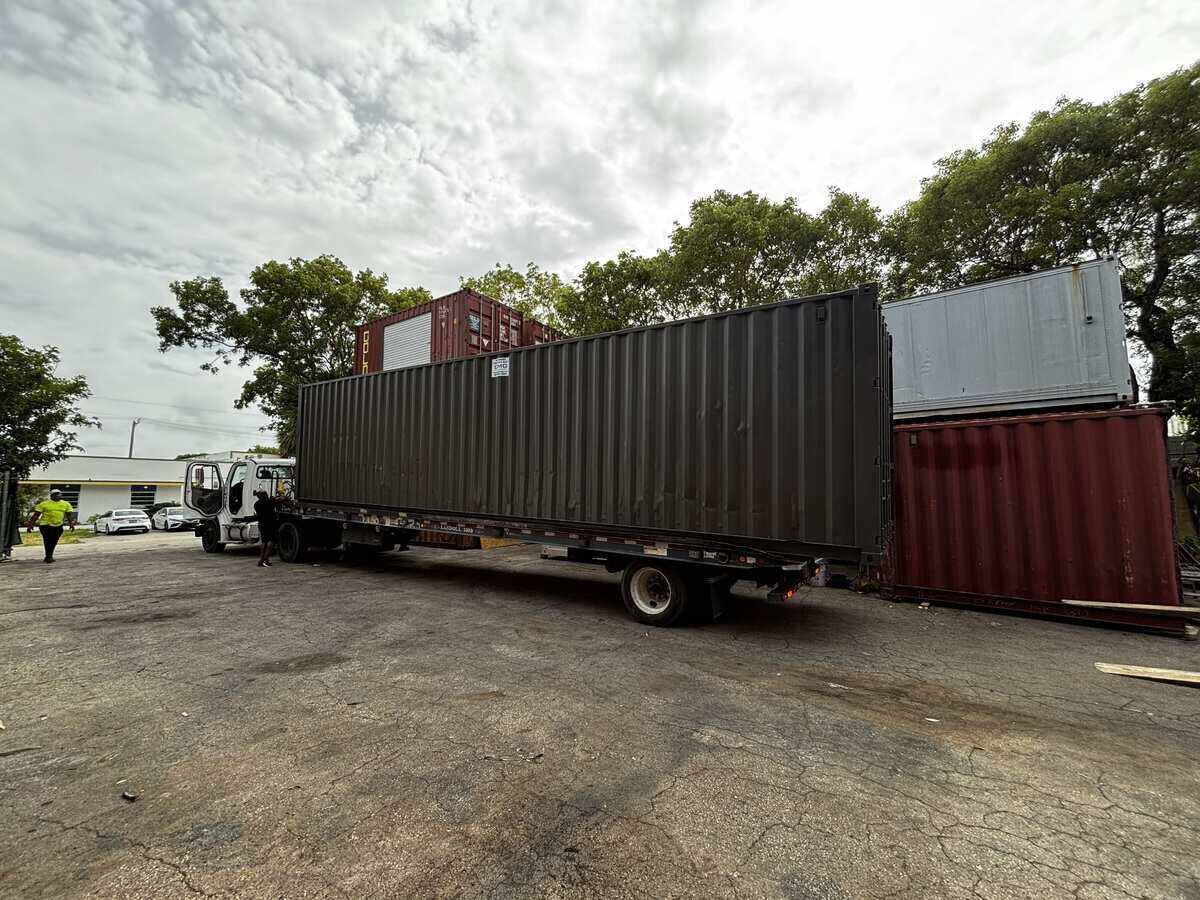
The truck may need more space than the container length itself, especially when using a tilt-bed or roll-off delivery method. For example, a 40ft container often needs a longer straight-line area for unloading because the container slides off the trailer as the truck pulls forward.
If access is limited, tell the delivery provider before the scheduled drop-off. Surprises are great for birthdays, not for 8,000-pound steel boxes.
Clear the Delivery Path
The delivery path should be clear from the entrance of the property to the placement area. This includes removing anything that could block the truck or interfere with unloading.
Before the truck arrives, make sure to:
- Move parked vehicles
- Remove temporary fencing or obstacles
- Clear debris from the route
- Trim low branches if needed
- Open the gates fully
- Mark soft or unstable ground
- Keep pets, workers, and visitors away from the delivery area
- Confirm that someone is available to guide the driver if needed
If the delivery is going to a commercial or construction site, coordinate with site supervisors in advance. The container delivery should not conflict with active equipment, material drop-offs, concrete work, or heavy truck traffic.
Ground Conditions Matter
The ground must be firm enough to support both the delivery truck and the container. Soft soil, fresh fill, wet grass, sand, or muddy ground can create delivery problems. A loaded delivery truck is heavy, and if it gets stuck, the issue can quickly become expensive and inconvenient.
Good ground conditions help with:
- Safer unloading
- Better container stability
- Easier door operation
- Reduced risk of settling
- Improved drainage
- Lower chance of site damage
If your site is wet or unstable, it may be better to delay delivery or improve the base first. For long-term use, placing the container slightly above ground level can help reduce moisture exposure and improve airflow underneath.
What Happens on Delivery Day?
On delivery day, the driver will usually inspect the access route and placement area before unloading. If the site is safe and ready, the container will be positioned according to the agreed placement plan.
A typical delivery may include:
- Arrival and access check
- Confirmation of placement location
- Truck positioning
- Container unloading
- Final placement adjustments, when possible
- Basic visual confirmation after drop-off
The delivery team will do what they can within safe equipment limits, but they may not be able to place the container in a location that is too tight, unstable, or unsafe. This is why preparation matters. A good delivery plan saves everyone from standing around pointing at mud.
Container Placement Tips for Better Long-Term Use
Once the container is delivered, its placement affects how well it works over time. A properly placed container is easier to access, safer to use, and better protected from drainage issues.
Helpful container placement tips include:
- Keep the container level from front to back and side to side
- Leave enough space around the doors
- Place the container on stable supports or a prepared base
- Keep water draining away from the unit
- Avoid placing it directly under weak tree branches
- Leave room for future loading and unloading
- Consider lighting if the container will be accessed at night
- Make sure the location does not block emergency or service access
If the container will be used often, think about the workflow around it. A storage container near a work area can save time. A container placed too far away may become annoying fast. And in logistics, “annoying fast” usually becomes “expensive slowly.”
Plan Ahead with CMG Containers
Shipping container delivery is easier when the site is ready, the access route is clear, and the placement location is planned in advance. The most important steps are simple: confirm the container size, prepare stable ground, check access requirements, clear obstacles, and decide where the doors should face before the truck arrives.
CMG Containers helps customers choose practical container solutions for storage, commercial, industrial, construction, and project-based needs. Whether you are planning the delivery of shipping containers for a jobsite, business property, warehouse, or remote location, a little preparation can make the process smoother from the start.
With the right shipping container site prep and placement plan, your container can arrive safely, sit securely, and be ready to support your work without turning delivery day into a steel-box circus.