
Disasters strike without warning—earthquakes, floods, hurricanes, wildfires, wars, and displacement events reshape communities overnight. In the aftermath, one question becomes urgent: Where will people live safely today—not months from now?
Temporary tents have long been the standard solution for displaced populations. But as crises become more frequent and severe, humanitarian organizations, governments, and aid networks are looking beyond short-term fixes. They need durable, scalable, and fast-deploying solutions that balance safety, dignity, and practicality.
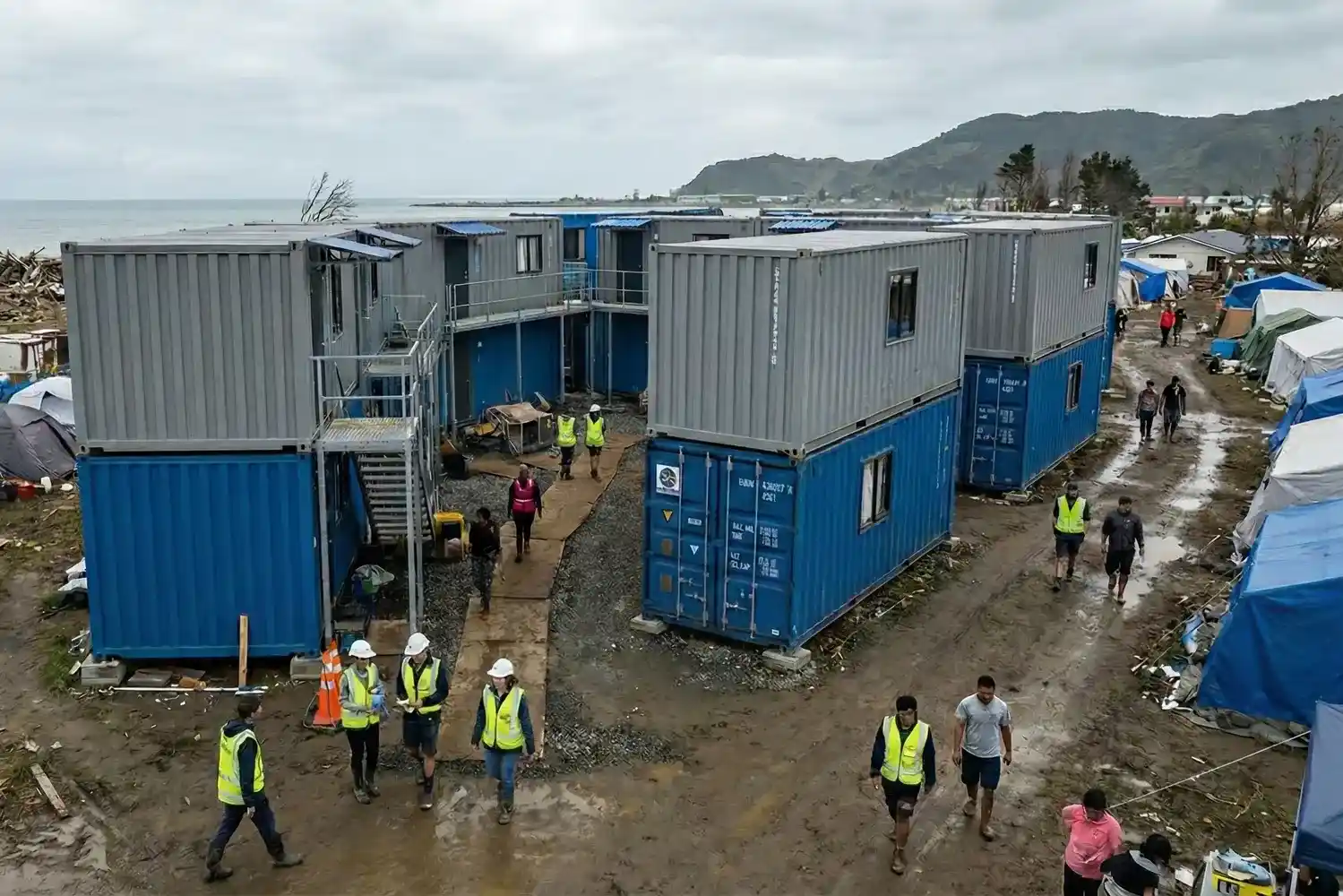
This shift has sparked a growing movement toward disaster relief containers and emergency housing containers—a new generation of temporary-to-permanent living structures designed to provide secure, weather-resistant shelter during the most vulnerable moments in people’s lives.
Shipping containers, once symbols of global logistics, are now evolving into cutting-edge humanitarian support systems.
Why Shipping Containers Are Emerging as a Proven Disaster Relief Solution
Traditional relief shelters come with limitations: low durability, limited privacy, susceptibility to extreme weather, and short lifespans. In contrast, shipping container shelters provide strength, mobility, and comfort.
Key advantages include:
- Rapid delivery and deployment
- Weather-resistant marine-grade steel
- Lockable, safe space for vulnerable populations
- Stackable and modular layouts
- Capacity to transition from emergency to semi-permanent housing
These benefits make containers one of the most promising global solutions in emergency housing strategy.
Rapid Deployment Containers: Built for Urgency, Designed for Humanity
Speed is everything after a disaster. Lives depend on how quickly safe shelters arrive and become operational.
- Rapid deployment containers can be:
- Delivered in large quantities
- Installed within hours
- Fully functional the same day (in basic models)
For organizations coordinating large-scale disaster response, this rapid rollout helps stabilize affected regions and prevent secondary crises.
From Steel Box to Shelter: How Containers Become Livable Homes
A raw container may look industrial—but modification transforms it into a reliable living space.
Common features in container-based relief housing include:
- Climate insulation
- Electrical systems powered by solar or grid
- Ventilation and windows
- Sanitation systems when needed
- Secure doors and storage
Layouts vary based on use:
| Purpose | Example Setup |
| Family Living | Beds, storage, community utilities |
| Medical Space | Sterilized interior, power for equipment |
| Coordination Center | Desks, communications, backup power |
| Sanitation Unit | Toilets, showers, water treatment |
This flexibility allows containers to support entire relief ecosystems—not just housing.
Modularity: Building Communities, Not Just Shelters
Scalability sets container housing apart. One shelter can serve a family—but hundreds can form:
- Temporary villages
- Worker support camps
- Field hospitals
- Humanitarian operational hubs
- Education and childcare units
Modular emergency shelters connect, stack, and expand based on need. Recovery doesn’t rely on one fixed blueprint—it grows with the crisis response.
Durability and Weather Resistance for Harsh Crisis Environments
Containers were engineered for storms, ocean travel, and long-term stacking pressure—which translates into:
- Wind and impact resistance
- Fire-safe materials depending on modification
- Structural longevity exceeding tents or basic huts
- Safety from wildlife, vandalism, and theft
Their strength reduces the need for shelter replacement, saving money and time during recovery.
Mobility and Reuse: Infrastructure With a Second Life
One challenge in relief efforts is what happens after crisis response ends. Tents often become waste; temporary buildings are abandoned or expensive to remove.
Containers solve this by enabling reuse:
- Move them to another region
- Store them for future deployment
- Reassign them as medical clinics, schools, or offices
This makes emergency housing containers a long-term asset rather than disposable infrastructure.
Humanitarian Housing Solutions With Dignity and Privacy
Beyond survival, people deserve dignity. Containers offer:
- Personal locking doors
- Private sleeping spaces
- Temperature-controlled environments
- Separation from crowds
- Space for families to remain together
Psychologically, this shift strengthens community recovery and supports emotional resilience.
Specialized Mobile Relief Units for Healthcare and Response Logistics
Not all emergency shelters house residents—some save lives through infrastructure support.
Common uses for container conversions include:
- Mobile surgical units
- Vaccination and testing stations
- Emergency pharmacies
- Isolation wards
- Command and communication hubs
- Storage for relief supplies, food, and medical equipment
These units create a foundation for organized disaster recovery rather than reactive patchwork systems.
Environmental Impact: A Sustainable Approach to Crisis Housing
Repurposing unused shipping containers keeps thousands of tons of steel in circulation and reduces reliance on carbon-intensive construction models.
Environmentally conscious upgrades may include:
- Solar energy systems
- Low-impact pier foundations
- Non-toxic insulation
- Rainwater collection and filtration
In an era where climate change is increasing disaster frequency, sustainable crisis housing becomes part of the solution—not another problem.
Cost Efficiency: A Practical Answer to Resource-Constrained Humanitarian Budgets
Budget limitations often determine how many survivors receive stable housing. Compared to traditional construction or continuously replacing tents, container shelters offer cost advantages:
- Lower replacement frequency
- Minimal site preparation
- Stackable and storable structure
- Capability for repeated redeployment
Financial predictability strengthens humanitarian planning.
Global Adoption and Case Studies of Success
Container-based emergency shelters are already being used in:
- Earthquake zones in Türkiye and Nepal
- Wildfire recovery areas in California and Australia
- Refugee settlements bordering Eastern Europe
- Flood-prone regions of Southeast Asia
- Conflict zones requiring fast, secure structure deployment
Their success across climates and geopolitics demonstrates true global viability.
Challenges Remaining: Innovation Still in Progress
No solution is perfect. Current barriers include:
- High transportation cost to isolated regions
- Limited local regulatory frameworks in some countries
- Need for better climate-specific container insulation
- Community perception and cultural acceptance
These obstacles continue to shape the next stage of design and deployment.
A New Vision for the Future of Emergency Housing
As technology progresses, disaster relief containers may soon feature:
- Smart-entry systems
- Modular furniture
- Expandable living sections
- Built-in satellite and emergency communication
- Renewable power and independent water systems
The future isn’t temporary—it’s adaptive.
Partnerships and International Coordination: Scaling the Model
No single organization can manage large-scale emergency shelter rollout. Governments, NGOs, private manufacturers, and logistics networks are now forming partnerships to create global readiness.
These collaborations are focused on:
- Standardizing layout and safety requirements
- Maintaining deployable container fleets
- Reducing deployment delays
- Sharing data between countries and agencies
- Pre-positioning shelter stock in high-risk regions
With coordinated support, container housing can shift from an improvised emergency option to a formalized part of the world’s crisis infrastructure.
Public Perception and Cultural Acceptance: Changing the Narrative Around Emergency Living
When container shelters were first introduced, some communities viewed them as industrial, temporary, or uncomfortable. Today, as design quality increases and successful deployments spread worldwide, perception is shifting.
Survivors often describe container shelters as:
- Safer
- More private
- More dignified
- More comfortable than tents or temporary structures
Cultural acceptance matters because disaster relief isn’t only about construction—it’s about rebuilding identity and belonging.
Community Integration and Long-Term Adaptability
Some disasters require short-term emergency response, while others leave communities rebuilding for years. One of the strengths of container-based shelters is their ability to evolve alongside recovery.
Instead of being dismantled or abandoned when urgency passes, these units can be repurposed into:
- Permanent affordable housing
- Small community centers
- Schools and training rooms
- Sanitation and hygiene blocks
- Micro-business or market spaces
This adaptability turns a temporary solution into a long-term asset. In regions where rebuilding takes years, emergency shelters often remain the foundation for new community development rather than being treated as waste or temporary debris.
Ultimately, this prevents displacement from becoming a second trauma—and helps communities rebuild with stability rather than starting over from zero.
The Next Era of Crisis Response Has Already Begun
In moments of displacement and uncertainty, shelter becomes more than a structure—it becomes safety, identity, and hope.
Shipping container shelters offer:
Speed.
Security.
Scalability.
Dignity.
And above all—a foundation to rebuild from.