
Housing isn’t just about shelter—it’s about accessibility, dignity, and adaptability. Today, affordability challenges, shifting lifestyles, sustainability concerns, and rapid urbanization are reshaping how we think about living spaces. Against that backdrop, one solution has been gaining steady momentum: modular container housing as a system, and within it, container homes as individual residential units.
To avoid confusion:
- Modular Housing = scalable multi-unit developments, workforce housing, student housing, communities
- Container Homes = standalone residential units / tiny homes / personal living spaces
Once used solely for global cargo transport, shipping containers are now being redesigned into modern, efficient, and highly customizable living environments. From minimalist tiny homes to multi-unit modular housing projects, container structures have evolved into a global architectural movement driven by cost-efficiency, sustainability, and flexible design options. In short, what used to stack on ports is now becoming the future of housing.
What Makes Modular Container Housing So Appealing?
The shift to alternative building methods isn’t accidental. Traditional construction is expensive, slow, resource-intensive, and—especially in dense cities—increasingly impractical. In contrast, container homes offer personal, compact living, while modular housing offers community-scale residential development.
Core benefits shared by both models include:
- Speed
- Affordability
- Sustainability
- Customization
But usage differs:
- Container Homes → Personal living, off-grid cabins, small footprint dwellings
- Modular Housing → Large-scale solutions like dorms, worker housing, disaster housing villages
How Shipping Containers Become Homes: From Steel Box to Modern Living Unit
At first glance, a shipping container might not look like a space you’d want to live in. But with the right modifications, it becomes a strong structural shell ready for transformation.
Container homes typically include:
- Cutting openings for windows and doors
- Welding and reinforcing structural frames
- Installing insulation (spray foam, mineral wool, or high-efficiency panels)
- Adding electrical, plumbing, and HVAC systems
- Applying interior finishes: flooring, drywall, cabinetry, fixtures
Modular housing follows the same construction logic, but units are multiplied, connected, or stacked to create full residential complexes.
Affordability and Accessibility: Why Container Housing Is a Game-Changer
Housing prices continue to skyrocket worldwide, making homeownership unattainable for many. Meanwhile, cities struggle with homelessness, housing shortages, and expensive rental markets. This is where container homes and modular container housing offer real, scalable value.
Shipping containers are:
- Cheaper to purchase than building from raw materials
- Faster to convert into livable structures
- Easier to standardize and mass-produce
Container homes are ideal for single-family or personal residential solutions, whereas modular housing enables scalable deployment for larger groups.
Government agencies, NGOs, universities, and community developers are now adopting modular container housing to create affordable housing, student residences, workforce housing, and transitional living spaces.
The model shifts the question from:
“Who can afford to live here?”
to
“How quickly can we make more livable homes available?”
Prefab Container Houses: Efficiency Meets Modern Design
One of the strongest advantages of container housing is prefabrication. Prefab container houses are built in controlled environments—factory-style—then transported to the installation site. This method:
- Reduces waste
- Improves quality control
- Minimizes weather-related delays
- Lowers overall construction costs
Prefab methods also allow modular expansion—meaning homes can grow gradually. Start with one unit, add another later. This flexibility appeals to first-time buyers, investors, and growing families who value adaptability over permanence.
When scaled to multi-unit layouts, the same prefab logic becomes the basis for modular housing developments, enabling community-style builds rather than just single dwellings.
Sustainable Living: Why Eco-Friendly Housing Solutions Matter
Climate concerns have accelerated interest in better, greener ways to build and live. Sustainable container homes are ideal for environmentally conscious homeowners because they:
- Repurpose existing steel structures
- Support off-grid living options
- Reduce dependence on carbon-heavy construction materials
Add-ons like:
- Solar power
- Rainwater harvesting
- Compost systems
- Energy-efficient insulation
- Low-impact building foundations
turn container homes into eco-friendly living solutions with low footprint and self-sufficient potential.
When implemented at scale, the same sustainability upgrades allow modular housing projects to serve larger populations while lowering environmental impact across entire communities.
Customization Possibilities: From Tiny Homes to Luxury Builds
One of the biggest misconceptions about modular container housing is that all units look alike. In reality, design flexibility is one of its biggest strengths.
Architects and designers use containers as building blocks—stacking, cutting, or combining them like large-scale Lego pieces.
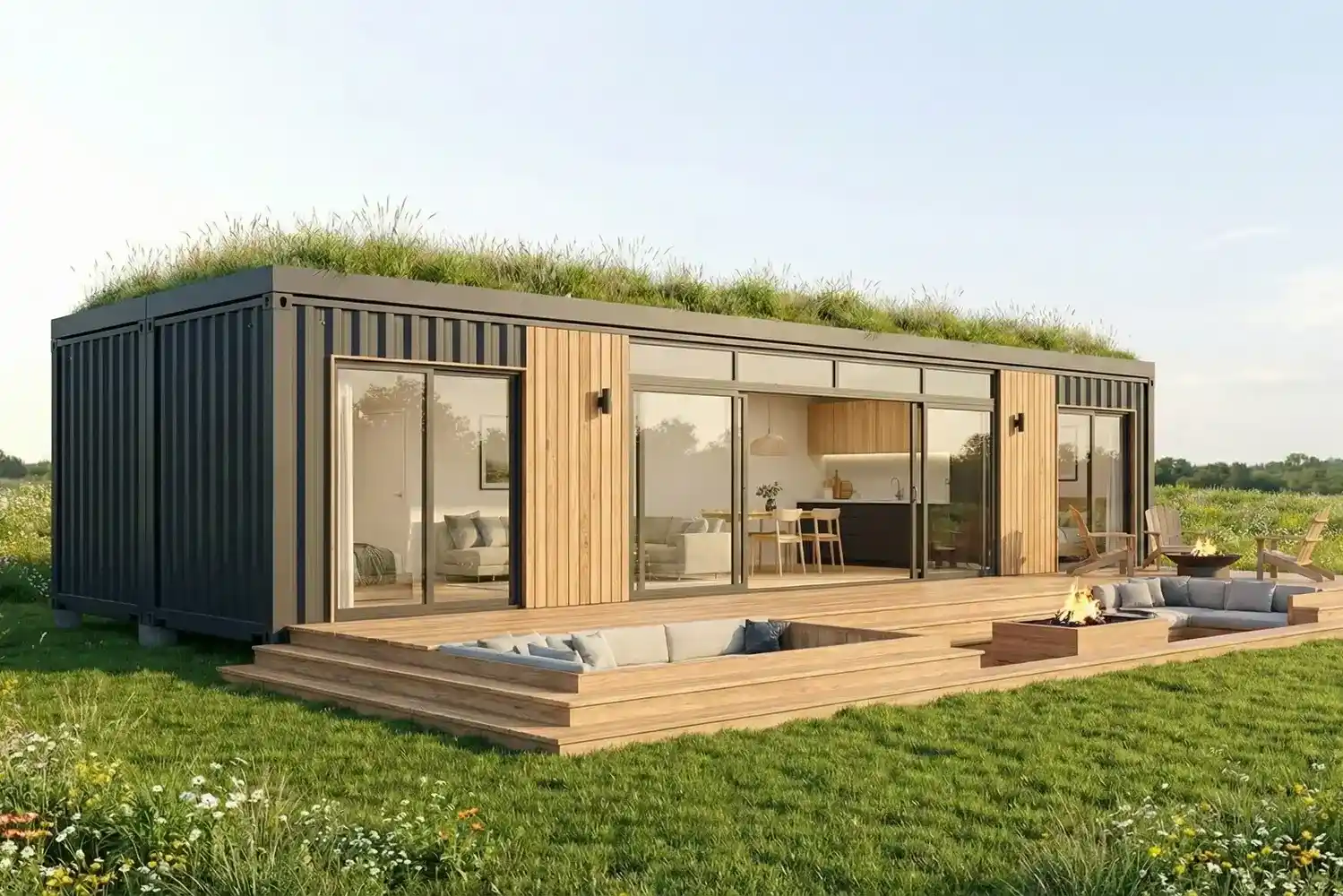
Common container homes include:
- Single-container minimalist homes
- Two-container side-by-side studio layout
- Multi-container modern residences
- Container townhouses or duplexes
- Container apartments or villages
Modular housing, however, expands this logic:
- Container townhouses or duplexes
- Container apartments or villages
- Large-scale multi-block modular communities
The external shell may look industrial, but interior finishes can reflect any lifestyle—minimalist, Scandinavian, industrial-modern, or luxury-contemporary.
Urban and Rural Applications: A Solution That Fits Anywhere
Whether placed in a busy city or quiet rural setting, container homes adapt to location and purpose. Their flexible footprint allows them to serve many types of living environments, including:
- Off-grid mountain cabins
- Backyard accessory dwelling units (ADUs)
- Student and workforce housing
- Emergency and transitional shelter
- Vacation rentals or Airbnb properties
- Tiny house communities
Container homes shine in individual or small-cluster residential use, while modular housing is ideal for high-capacity living solutions such as dorms, worker accommodation, or disaster housing villages.
Durability and Structural Strength: Built to Withstand the Elements
Shipping containers are engineered to withstand extreme conditions—saltwater exposure, heavy stacking pressure, storms, transit impacts, and drastic temperature changes.
This durability translates to long-term housing benefits:
- Resistance to mold, pests, and extreme weather
- Strong wind and seismic performance
- Long lifespan with minimal structural upkeep
For single-unit living, this means reliable, low-maintenance homes. For modular housing developments, it enables resilient communities capable of enduring climate stress and natural disasters.
Time Efficiency: Reducing Build Delays and Construction Stress
A typical home build requires coordinating multiple subcontractors, supply chains, and site work—leaving room for delays and cost increases.
A modular container housing project, however:
- Uses standardized dimensions
- Has predictable project timelines
- Allows simultaneous site prep and unit fabrication
In many cases, Container homes can be ready for move-in within 8–12 weeks, which is significantly faster than traditional homebuilding.
Common Myths About Container Homes: Debunking Misconceptions
Even with rising popularity, container homes face a few persistent myths. Let’s clarify:
| Myth | Reality |
| Container homes are unsafe | They’re built from industrial-grade steel—stronger than many timber structures |
| They feel cramped | Containers can be combined, stacked, and expanded |
| They are only temporary | With proper insulation and finishing, they last decades |
| They can’t meet building codes | With the right planning, they comply with residential codes and zoning |
Most concerns vanish once people experience a well-designed container home or a professionally executed modular housing project.
Challenges to Consider: What Homeowners Should Know
Container homes offer flexibility, but they also require planning. Common challenges include:
- Zoning approval and local building code compliance
- Proper insulation to avoid condensation
- Structural reinforcing when cutting large openings
- Transport logistics and foundation placement
Modular housing adds an extra layer of compliance involving multi-unit zoning, site planning, utility infrastructure and occupancy standards.
Working with experienced designers and builders ensures these issues are handled properly.
A Growing Global Movement: The Future of Housing?
From Australia to Europe to North America, modular container housing has already made its mark. Entire neighborhoods, student dorms, military bases, and pop-up rental communities built from containers now serve thousands of people.
At the individual level, container homes are becoming an alternative path to private homeownership and off-grid living. At a larger scale, modular housing enables rapid deployment of multi-unit residential solutions for cities, institutions, and disaster-relief programs.
Why? Because this isn’t just an alternative housing method—it’s a response to global need.
- Cities need faster building solutions
- People need accessible ownership pathways
- The planet needs more sustainable building systems
Shipping containers allow all three goals to coexist —as private homes and as modular housing systems for communities.
Financing and Regulatory Considerations: Making Container Housing Legally and Financially Accessible
While modular container housing offers affordability and flexibility, financing and regulatory compliance can still influence the building process. Many regions are still adapting building codes to recognize container-based construction, which means research and planning are key.
Financing approaches vary:
- Traditional mortgages are increasingly available as container homes become more mainstream.
- Construction loans are another option, especially for prefab container houses being built in phases.
- Private financing or cash purchase remains common, especially for off-grid builds or rural installations.
On the regulatory side, homeowners must understand:
- Zoning restrictions
- Foundation requirements
- Engineering and permitting standards
- Utility connection guidelines
- Fire safety and energy efficiency codes
Container homes often follow residential permitting routes, while modular housing communities require additional development approvals, site planning, and infrastructure compliance.
The good news? As demand grows, many regional authorities now offer clear pathways to approval, especially when working with licensed builders who specialize in eco-friendly housing solutions. Step by step, regulatory environments are shifting to support innovation rather than restrict it—marking another sign that both modular housing and individual container homes are transitioning from “alternative” to “mainstream.”
Investment Potential: Why Container Homes Appeal to Developers, Landowners, and Rental Markets
Beyond personal housing, shipping container houses are becoming a sought-after investment category. Their scalability, mobility, and relatively low upfront cost make them ideal for multiple business models.
Container homes are popular in the consumer market—particularly short-term rentals, ADUs, off-grid vacation units, and Airbnb properties. Modular housing appeals to developers and institutions looking to build workforce housing, dormitories, or community complexes at scale.
Popular investment uses include:
- Short-term vacation rentals (Airbnb, glamping, tourism retreats)
- Workforce or employer-based housing
- Student housing communities
- Accessory Dwelling Units (ADUs) for homeowner rental income
- Emergency or transitional shelters funded by municipalities or non-profits
In competitive rental markets, aesthetic appeal also matters—and container homes stand out with modern design, minimalistic lines, and architectural character. Their uniqueness alone creates demand.
For investors, the biggest advantage is adaptability. When zoning, land use, or market demand shifts, container housing can relocate, expand, or reconfigure—from single-unit rentals to full modular housing complexes.
As housing becomes one of the world’s most pressing economic questions, container-based development offers a meaningful path toward scalable, resilient, and inclusive housing systems.
Living Differently Isn’t a Trend—It’s Progress
The appeal of shipping container houses isn’t just their cost or speed—it’s the freedom they represent. The freedom to design homes differently, live sustainably, move when needed, and build communities that don’t rely on outdated systems.
Container homes empower individuals to live affordably and sustainably.
Modular housing expands the same logic to community scale, enabling cities and organizations to address housing needs rapidly.
As the world continues to rethink how we live, one thing is clear:
Container homes and modular housing are not just future concepts—both are already reshaping how people inhabit space today.