
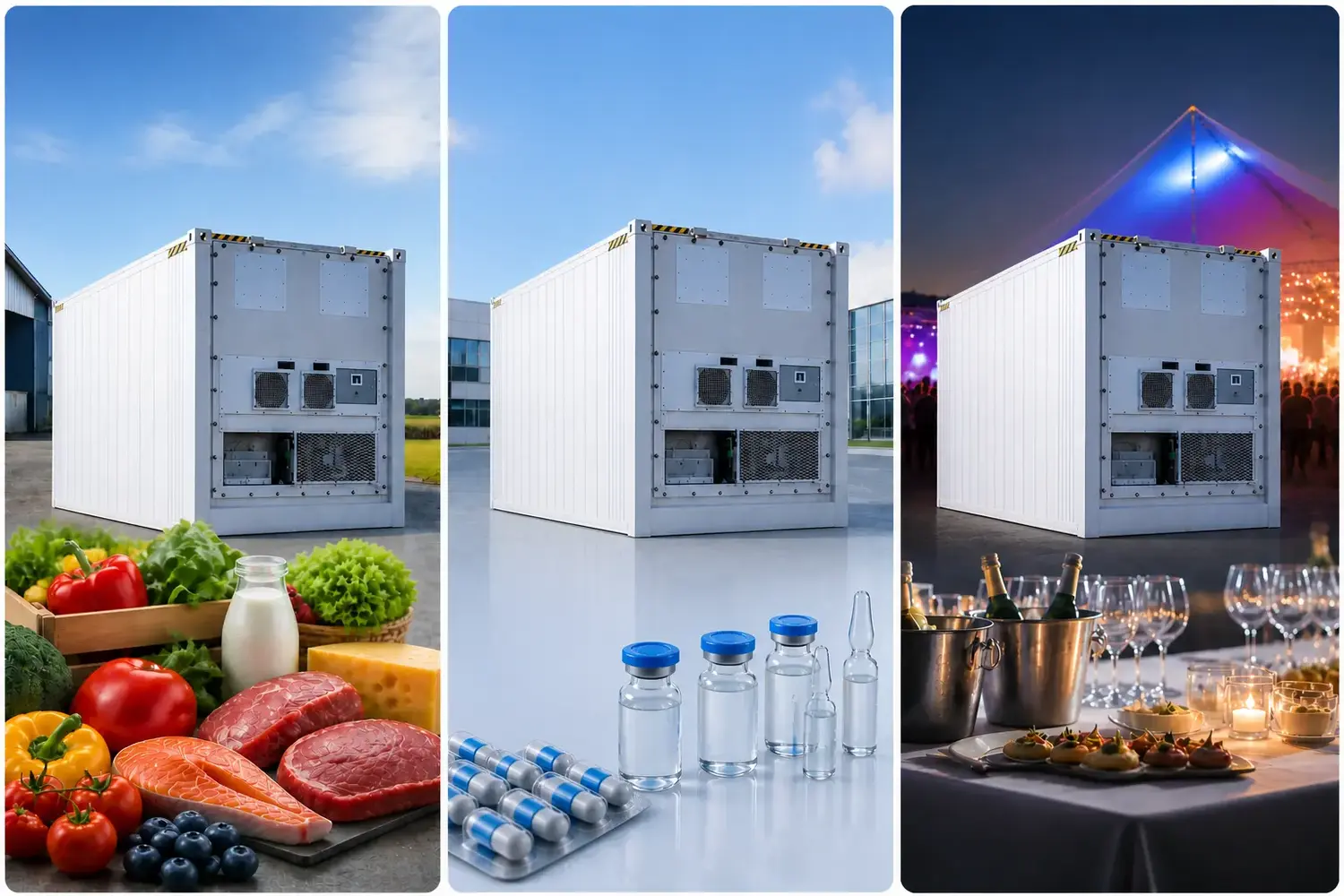
Cold storage isn’t just about keeping things cold—it’s about keeping them stable. Whether it’s fresh food, sensitive pharmaceuticals, or event supplies, even a small temperature shift can cause real problems.
That’s where refrigerated containers come in. They give you a controlled environment that you can move, place where needed, and rely on—without building out permanent infrastructure.
Let’s look at how they actually work in real-life situations.
What Are Refrigerated Shipping Containers?
Refrigerated shipping containers—often called reefer containers—are insulated units with built-in cooling systems that keep the inside at a steady temperature.
Unlike standard containers, they don’t just protect items from outside conditions—they actively manage what’s happening inside.
In practical terms, they can:
- Hold everything from frozen to chilled temperatures
- Run continuously with a stable power source
- Be used for both transport and on-site storage
They’re not complicated—they just do one job very reliably.
Why Cold Chain Storage Matters More Than Ever
Cold chain storage means keeping products at the right temperature from start to finish. If that chain breaks, even briefly, the product can lose quality—or become unusable.
In industries like food and pharma, that’s not a small issue.
Cold storage shipping containers help reduce those risks by:
- Keeping conditions stable during storage and transport
- Filling gaps where fixed refrigeration isn’t available
- Allowing storage closer to where it’s actually needed
Instead of working around limitations, you bring the right environment with you.
Refrigerated Containers in the Food Industry
Food storage is where refrigerated containers really prove their value.
Fresh produce, frozen goods, prepared meals—everything depends on staying within the right temperature range. If that slips, quality drops fast.
These containers are commonly used for:
- Handling overflow during busy seasons
- Acting as backup when refrigeration systems go down
- Moving perishable goods between locations
- Supporting on-site storage for catering and food operations
They give businesses breathing room. You don’t have to overbuild your storage—you can expand when needed.
Supporting Pharmaceutical Storage and Compliance
Pharmaceutical storage is less forgiving.
Certain medications, vaccines, and biologics require very specific temperature ranges. Even a small deviation can make them ineffective.
That’s why refrigerated containers for sale or lease are often used to:
- Store temperature-sensitive medical supplies
- Support distribution during high-demand periods
- Provide backup during maintenance or system downtime
- Extend storage capacity for labs and hospitals
It’s not just about convenience—it’s about staying compliant and avoiding costly losses.
Event Storage: Cold Chain Without Permanent Infrastructure
Events come with one constant problem: you need everything to work perfectly… in a temporary setup.
Food, drinks, ingredients—all need proper storage, but installing permanent refrigeration isn’t realistic.
That’s where portable cold storage containers step in.
They allow teams to:
- Store large quantities of food and beverages on-site
- Keep everything at safe serving temperatures
- Adjust quickly if demand changes
- Avoid last-minute storage stress
It’s basically peace of mind in container form.
The Advantage of Portability and Flexibility
One of the biggest benefits of refrigerated containers is simple—they go where you need them.
No construction, no major setup. Just delivery, placement, and use.
That flexibility makes them useful for:
- Remote locations
- Seasonal businesses
- Emergency situations
- Temporary storage expansions
A portable cold storage container gives you control without locking you into a fixed system.
What makes this even more valuable is how quickly they can be deployed. In many cases, you can go from “we need more cold storage” to having a fully operational unit on-site within a very short time. There’s no waiting on construction timelines or dealing with permanent infrastructure decisions that you might outgrow later.
They also adapt well as your needs change. You can reposition them, scale up by adding more units, or remove them entirely when demand drops. That kind of flexibility is hard to achieve with traditional cold storage setups, which are often fixed in place and expensive to modify.
For businesses that deal with fluctuating demand, unpredictable conditions, or multiple locations, this mobility isn’t just convenient—it becomes part of how operations stay efficient and responsive.
Temperature Control and Consistency
What really matters isn’t just cooling—it’s consistency.
Refrigerated containers are built to:
- Maintain steady temperatures even when it’s hot outside
- Distribute air evenly inside
- Avoid sudden fluctuations
That consistency is what keeps the cold chain intact. And honestly, that’s the whole point.
Energy Efficiency and Operational Considerations
Modern refrigerated shipping containers are more efficient than people expect.
They’re designed to hold temperature without constantly overworking the system. Still, a few basics matter:
- You need a reliable power source
- Placement affects efficiency (shade helps more than people think)
- Maintenance keeps things running smoothly
Handled right, they’re both practical and cost-efficient.
Backup and Emergency Cold Storage Solutions
Even the best systems fail sometimes. Power issues, breakdowns, unexpected demand—it happens.
That’s where refrigerated containers quietly save the day.
They’re often used as:
- Backup storage when primary systems fail
- Temporary support during repairs or upgrades
- Extra capacity during busy periods
Instead of scrambling for solutions, you already have one in place. That alone can make a huge difference.
On-Site vs Off-Site Cold Storage: Why Location Matters
Traditional cold storage often means moving goods to a fixed facility. That adds time, cost, and risk.
With cold storage shipping containers, you bring storage to the product instead.
That works especially well for:
- Restaurants and catering setups
- Pharma distribution points
- Events that need immediate access
Less movement means fewer risks. And fewer risks mean fewer problems.
Weather Resistance and Year-Round Reliability
One thing that often gets overlooked is how these containers perform in different conditions.
Refrigerated containers are designed to operate in both extreme heat and cold, maintaining internal temperatures regardless of what’s happening outside.
This makes them especially useful for:
- Outdoor environments with changing weather
- Seasonal operations that run year-round
- Locations where indoor storage isn’t available
Whether it’s peak summer heat or colder conditions, the internal environment stays controlled—which is exactly what cold chain storage depends on.
Choosing the Right Refrigerated Container
Not every container fits every situation.
Before choosing, it helps to think about:
- What temperature range you need
- How much space you’ll use
- Whether this is temporary or long-term
- Where the container will sit
For some, a 20ft unit is enough. For others, a 40ft container makes more sense. It depends on how you actually use it—not just what looks good on paper.
Refrigerated Containers for Sale vs Rental
Buying vs renting comes down to usage.
Refrigerated containers for sale make more sense when:
- You’ll use them regularly
- You need long-term storage
- You want full control over the setup
Renting works better when:
- The need is temporary
- Demand changes seasonally
- It’s for a specific project or event
There’s no “better” option—just what fits your situation.
Common Use Cases Across Industries
These containers show up everywhere, not just in one field.
They’re used for:
- Food storage and distribution
- Pharmaceutical supply management
- Event catering and beverage storage
- Agricultural products
- Backup refrigeration for businesses
The flexibility is what makes them so widely used.
Keeping the Cold Chain Intact
Cold chain storage only works if it stays consistent from start to finish. Once that consistency is lost, even briefly, the impact can be immediate—whether it’s spoiled food, compromised medication, or wasted inventory.
That’s why refrigerated containers are more than just storage units. They’re a way to control risk, maintain quality, and keep operations running without interruption.
They give you flexibility when demand changes, reliability when systems fail, and control when conditions aren’t ideal. Instead of depending entirely on fixed infrastructure, you have a solution that adapts to where you are and what you need.
In industries where temperature isn’t negotiable, that kind of control isn’t just helpful—it’s what keeps everything working.