

There is no single price for the cost to move a shipping container, because every move is priced on its own details. Distance, the equipment needed, access at both ends and the size of the container all shape the final quote.
This guide walks through each cost factor and explains how the truck choice changes the bill. It also lists the questions to ask a hauler before you book. It also covers when a forklift or crane makes sense and simple ways to keep the move cheaper. For the price of the containers themselves, see the guide to shipping container cost.
What Drives the Cost to Move a Shipping Container
If you are asking how much does it cost to move a shipping container, the honest answer is that six factors set the price. Each one is something a hauler will ask about before quoting, so having the answers ready speeds up the process.
| Cost factor | How it affects the quote |
|---|---|
| Distance | Longer moves add fuel, driver time and often a per-mile rate |
| Size and weight | A 40ft box needs a bigger truck than a 20ft, and a loaded box needs heavier equipment than an empty one |
| Equipment | A single tilt-bed truck usually costs less than a flatbed plus a forklift or crane |
| Access at both ends | Tight gates, soft ground or low wires can call for different equipment or extra time |
| Permits | Oversize moves or street work may need permits from the state or city |
| Labor | Rigging, a spotter or a crane operator adds people and hours to the job |
Container size also decides the truck, since a 20ft box fits a tilt-bed while a 40ft box usually travels on a flatbed. Distance and equipment usually carry the most weight in the final number. A short move with one truck and clear access sits at the low end of the range. A long move that needs a crane at the far end sits at the high end. Permit and access rules differ by state and city, so confirm them with your hauler and the local authority before the day of the move.
Shipping Container Relocation Cost by Truck Type
The truck is the biggest single choice in any shipping container relocation, because it decides whether extra lifting equipment is needed. CMG’s own container delivery and pickup guidance gives a useful picture of how the main truck types are used.
A tilt-bed truck, also called a rollback, tilts its bed and slides the container off at the site with no extra equipment. CMG uses this type for 20ft containers and smaller, and notes that tilt-bed delivery is usually cost effective for up to about 200 miles. The driver needs about 60 feet of straight space and 15 feet of overhead clearance to unload.
A flatbed semi trailer carries 40ft containers, larger units or two 20ft boxes at once, and suits longer moves. For long distance deliveries over 200 miles, CMG recommends using flatbed trucks instead. The trade-off is unloading, since a flatbed needs a forklift or crane at the site, which adds equipment and labor to the bill.
A side loader truck lifts the container on and off with its own built-in arms. It suits tight yards where a tilt-bed cannot back in straight. A tilt-bed or a side loader is how to move a shipping container without a crane, since both trucks unload the box on their own. The step-by-step side of the job is covered in the guide on how to transport a shipping container.
What to Ask a Hauler Before You Book
Comparing quotes is only useful when every hauler is pricing exactly the same job. Share the container size, both addresses and photos of each site so every quote starts from the same facts. These questions keep each quote on the same footing and show what is included in the price.
- Trailer type. Which trailer to move the shipping container will they send, and does it suit the container size?
- Unloading. Who unloads the box at the new site, and will a forklift or crane be needed?
- Access and clearance. How much straight space and overhead clearance does their truck need at each end?
- Permits. Will the move need permits, and who arranges and pays for them?
- Inclusions. Does the quote cover loading, unloading, fuel, waiting time and any return trip?
- Exclusions. What would add to the price on the day, such as soft ground or a second attempt?
Ask for each answer in writing as part of the quote. An itemized quote makes it easy to see which hauler offers the better value for your particular site. It also gives you a clear record if anything about the job changes on moving day.
Moving a Shipping Container With a Forklift
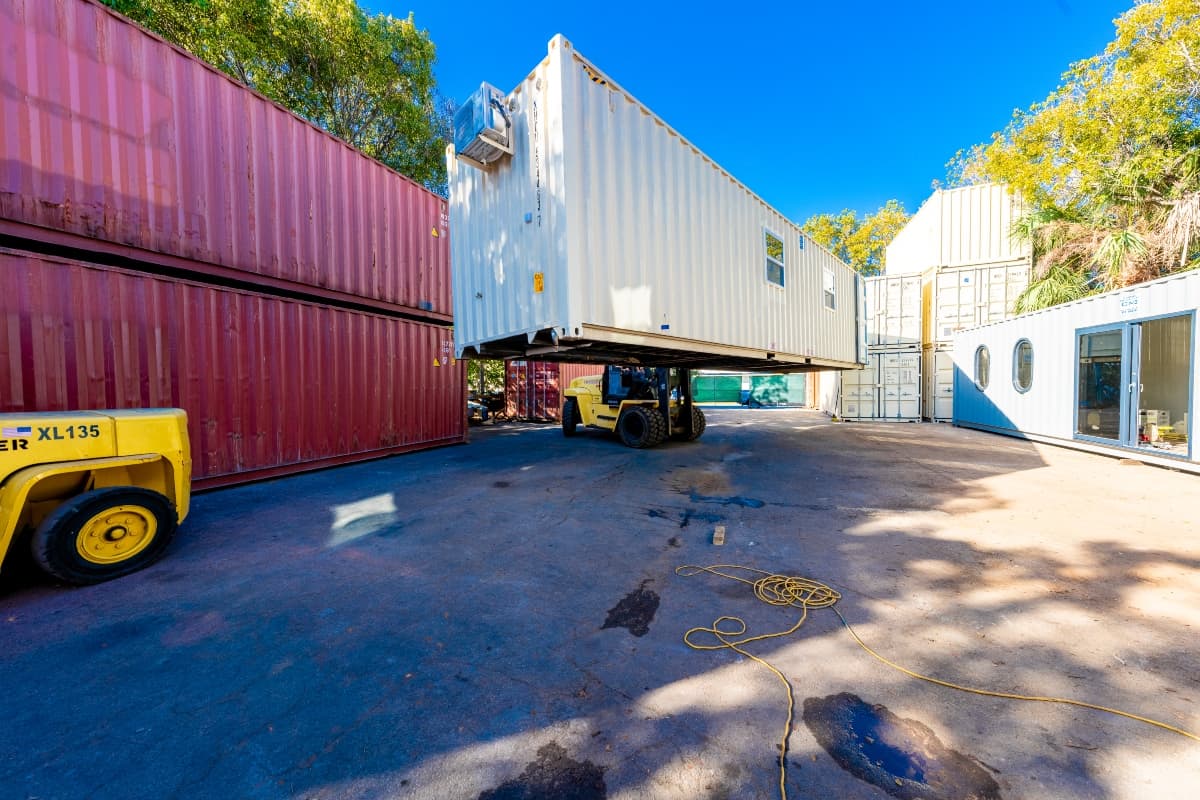
Moving a shipping container with a forklift is often the cheapest option for short moves on the same property. Farms, yards and warehouses often have a suitable forklift on site already. In that case the job can take minutes, with no truck to book.
The forklift needs enough rated capacity for the container’s weight and forks long enough to reach through its fork pockets. Firm, level ground along the whole route matters as much as the machine, since soft ground can shift the load during the lift. Keep the container empty and low to the ground while it travels.
Whoever runs the machine must be a trained operator, even for a short move on private land. OSHA’s powered industrial truck training rule states that only trained and competent operators may run a forklift on a work site. For longer distances, rough ground or a 40ft container, a truck or crane is usually the better fit. A forklift also needs a clear route wide enough for the container and the machine together, so measure gates and gaps before the lift.
When You Need a Crane to Move a Shipping Container
A crane to move a shipping container comes in when a truck cannot reach the final spot. Common examples include tight backyards, sites behind a house or fence, raised foundations and placements over walls, ditches or other obstacles.
Crane jobs cost more than truck-only moves because they bring in more equipment and people. The bill typically covers the crane itself, a qualified operator, rigging gear and crew. It also covers a lift plan that sets the crane position and the path of the load. Some lifts also need a street permit or a temporary closure. Crane size depends on the container weight and how far the crane must reach, so the reach often matters as much as the load.
The upside is precision, since a crane can set the container exactly where it needs to go. To keep crane time short, have the base ready and the drop spot marked before the crane arrives. Pairing a crane with a flatbed is common for 40ft containers, since flatbed trucks are the usual way to carry a box of that length.
Ways to Keep the Move Cheaper
A little preparation before the truck arrives can lower the cost to move a shipping container. Most savings come from making the job faster and simpler for the hauler.
- Empty the container first. A lighter box fits more equipment options and lowers the risk of shifting contents.
- Clear and measure the access path. Check gate widths, overhead wires, tree branches and turning room at both ends.
- Prepare the new base in advance. Level ground and a ready foundation let the driver unload once, so prepare your site before the truck arrives.
- Get itemized quotes. Compare at least two quotes line by line using the hauler questions above.
Once the box is in its new spot, plan to anchor the container if the site is exposed to strong wind. That step protects the move you just paid for and keeps the box where you placed it.
If the quote comes close to the price of a new unit, compare it with a container delivered straight to the new site. CMG sells and rents new and used containers with nationwide delivery, including 40ft containers for sale. A replacement or extra box can then arrive exactly where you need it. When you are ready, get a free quote from our team.
Frequently Asked Questions
Can a forklift lift a shipping container?
Yes, a forklift can lift a container that has fork pockets, which are slots in the base built for the forks. Many 20ft containers have fork pockets on both long sides. 40ft containers usually do not, so they are lifted by crane, side loader or a container top handler instead.
What size forklift do you need to lift a shipping container?
The forklift must be rated above the container’s weight at the load center, with forks long enough to pass through the pockets. An empty box is far lighter than a loaded one, so empty it before the lift. Check the tare weight marked on the doors and the shipping container weight guide.
Can a skid steer move a shipping container?
A skid steer is not built to lift or carry a shipping container. It suits only a short nudge of an empty box on firm ground. For any real move, a tilt-bed truck, a rated forklift or a crane does the job safely and keeps the container undamaged.
Can a tow truck move a shipping container?
A rollback tow truck with a tilting bed can move a 20ft container, and it works much like a tilt-bed delivery truck. A standard hook-and-chain tow truck is not suited to the job, so ask for a rollback when pricing the move. For a 40ft box, a flatbed is the usual choice.
Can you move a loaded shipping container?
Some loaded containers can be moved, but the extra weight limits which trucks and forklifts can handle them. Contents can also shift during the lift and damage the box or the cargo inside. Emptying the container first keeps more equipment options open and usually lowers the cost.
Can a crane lift a shipping container over a house?
Yes, a properly sized crane with a trained operator can lift a container over a house. The job needs a lift plan, clear space for the crane and often a street permit, so confirm access and local rules early. Overhead wires and trees along the lift path also need checking.
What kind of truck moves shipping containers?
Tilt-bed or rollback trucks move most 20ft containers, while flatbed trailers carry 40ft boxes and longer loads with a forklift or crane at the site. Side loader trucks suit tight spaces where a straight approach is not possible. The guide on how to transport a shipping container covers each method.