
An empty shipping container is heavy to lift but light for its size. In a strong storm, its tall, flat sides catch wind like a sail. Knowing how to anchor a shipping container is what keeps that steel box exactly where you placed it when the weather turns.
This guide explains the three ways wind moves an empty container and the main ground anchor options for different sites. It then walks through the tie-down steps at the corner castings and a simple routine to run after every storm. Whether the box holds farm tools, job site gear or household overflow, the same principles apply.
What High Wind Does to an Empty Shipping Container
Wind acts on a container in three ways, and each one calls for a different kind of hold. Sliding happens when wind pushes the box sideways along the ground, most often on smooth surfaces such as wet concrete or packed gravel. Tipping, also called overturning, is the box rotating over one long bottom edge as pressure builds on the opposite side.
Uplift is the third force, and it is the one owners notice least. Wind moving over the roof lowers the pressure above the container, while air forced underneath can lift one side and start the box rocking. Once a corner leaves the ground, sliding and tipping both become much easier.
Load matters more than most owners expect when anchoring a shipping container. A loaded box has dead weight holding it down, but an empty or lightly loaded one relies almost entirely on its own steel. That is why storage containers sitting empty between uses, or holding only light gear, gain the most from a proper anchor system.
Orientation plays a part too, because the long side of a container is its largest flat surface. That side takes the most load whenever it faces straight into the prevailing wind. Where the site allows, pointing the narrow end toward the usual wind direction reduces the push before any anchor goes in.
Shipping Container Ground Anchors: The Main Options
The right shipping container ground anchors depend on the soil, the foundation and how long the container will stay in place. Most setups use one of the three systems below, and every one of them connects to the container at its bottom corner castings.
Helical (Auger) Ground Anchors
Helical anchors, also called auger anchors, are steel shafts with a screw-shaped plate that you drive into the soil at each corner. A cable or rated strap then runs from the anchor head to the corner casting, with a turnbuckle to set the tension.
They suit soil sites and containers that may move later, since the anchors back out and can be reused. Holding power depends on soil type and anchor depth, so follow the manufacturer’s rating for your ground conditions. Clay, sand and rocky fill all grip differently, and a longer anchor is the usual answer for loose soil.
Concrete Footings and Bolt-Down Brackets
Bolt-down brackets lock into the corner castings and fasten to concrete footings or a slab with anchor bolts. These shipping container anchors suit permanent placement well, because the box and the concrete work as one unit against sliding, tipping and uplift.
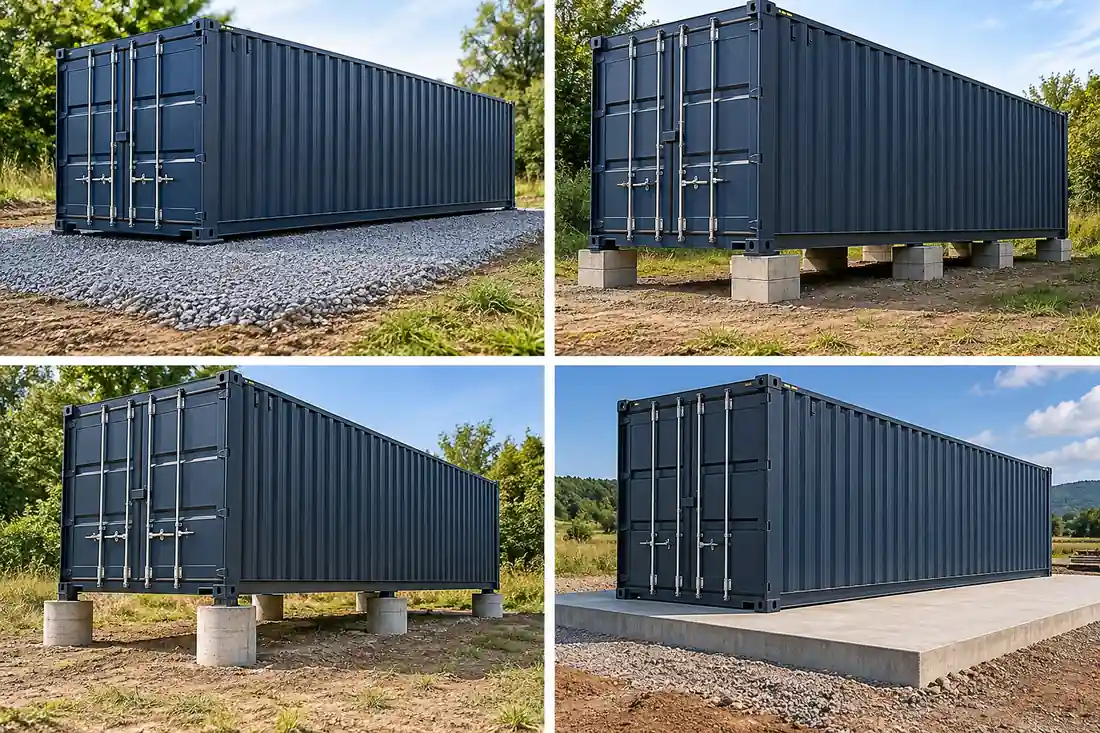
Footings need to be level, cured and set under each corner before the container arrives. The guide to shipping container foundation options covers footings, piers and slabs in detail, so this post stays focused on the anchoring itself. Once the concrete is ready, the brackets bolt down and the box is held at all four bottom corners.
Welded Plates on a Slab
For a fully permanent setup, steel plates are cast into the slab at each corner position and then welded to the bottom corner castings. The result is a very strong connection with no hardware to loosen over time.
The trade-off is flexibility, because a welded container is hard to relocate without cutting it free. This work calls for a qualified welder with experience on structural steel. If the container is a rental, talk to CMG before welding, drilling or bolting anything to the unit.
How to Tie Down a Shipping Container Step by Step
Learning how to tie down a shipping container comes down to six steps, done in order. Ground preparation comes first because every later step depends on a level, stable base.
- Choose level, well-drained ground. Water pooling around the base softens soil anchors and speeds corrosion at the corners, so pick a spot that sheds rain.
- Set the foundation. Gravel pads, piers, footings or a slab all work well, as long as each corner sits level and fully supported.
- Mark the four corners. Measure the footprint and mark each bottom corner casting position before delivery, so the anchors line up with the castings.
- Install the anchors. Drive helical anchors to their rated depth, or set brackets and plates in the concrete at each marked corner.
- Connect at the corner castings. Use rated shackles, cables, straps or brackets made for container castings, matched to the anchor maker’s load rating.
- Tension evenly. Tighten each turnbuckle or bolt in stages, working around the box, so all four corners carry an equal share of the load.
Steps three and four are easiest before the container arrives, since placing a box over marked positions is simpler than fitting anchors around it afterwards. For a rented container, check with CMG before attaching any hardware to the unit.
Shipping Container Tie Down Points: Use the Corner Castings
Every standard container has eight corner castings, one at each corner of the frame, and these are the correct shipping container tie down points. The castings are thick steel blocks built to take lifting, stacking and lashing loads, which is exactly the job an anchor asks of them.
For ground anchoring, use the four bottom corner castings, which sit closest to the foundation. Their openings accept twist locks, shackles and bracket pins, and they connect straight into the main frame of the container.
Keep fasteners off the corrugated side walls, the roof panels and the door gear. These parts keep weather out, but they are not built to resist a pulling load in a storm. How castings lock to each other and to foundation plates is covered in the guide to twist locks.
Matching the Anchor System to Your Site
The right shipping container anchors are the ones that fit your ground, your timeline and how exposed the spot is. Use the table below as a starting point, then follow the anchor maker’s rating or an engineer’s advice for the final setup.
| Site condition | Common anchor approach | Good to know |
|---|---|---|
| Soil, temporary placement | Helical anchors with cable to the castings | Anchors back out and move with the box |
| Gravel pad | Helical anchors driven through the gravel | Anchors need firm soil beneath the pad |
| Concrete footings or piers | Bolt-down brackets at each corner | Unbolts if the box moves later |
| Existing concrete slab | Bolt-down brackets or welded plates | Welding is permanent, bolts allow relocation |
| Open, exposed or coastal lot | The heaviest system the foundation allows | Point the narrow end into the usual wind |
Exposure changes the picture more than any other factor on the list above. An open field, a hilltop or a coastal lot sees stronger, steadier wind than a yard sheltered by buildings or trees. The same container can need a heavier anchor system on one property than on the next.
Checking Anchors After a Storm
An anchor system stays dependable when it gets a quick walk-around after each major storm. The check takes a few minutes and catches small issues before the next weather event arrives.
- Cable and strap tension at all four corners
- Anchor heads sitting flush, with no lift or tilt
- Bracket bolts tight and free of movement
- Rust or wear on the corner castings and hardware
- Ground settling, washout or standing water near the base
Re-tension any loose cable, replace hardware showing heavy corrosion and refill washed-out ground before the next storm. In salt-air locations, adding this check to a regular maintenance schedule keeps corrosion under control between storms as well.
Permits and Placement Before You Anchor
Many towns and counties have rules for containers placed permanently on a property, and anchoring to a foundation can bring a box under those rules. Wind zone requirements in coastal and storm-prone areas can also shape the anchoring, so check with your local building department before you start.
Plan delivery access and drainage at the same stage, since the truck needs a clear path and the base needs to shed water. Our team can help you pick the right size, from 20ft shipping containers for compact sites to 40ft containers for sale for larger storage needs. Farm owners planning a bigger layout can also see how containers work as shipping container barns.
Knowing how to anchor a shipping container before storm season means less to think about when the forecast turns. When you are ready to choose a container for your site, get a free quote from CMG Containers.
Frequently Asked Questions
Can a shipping container withstand a tornado?
A steel container is a strong structure, but strength alone does not keep it in place during a severe storm. Anchoring is what holds the box down against sliding, tipping and uplift. A well-anchored container has a far better chance in high wind, though no anchor system can promise protection from a direct tornado strike.
Can a shipping container be used as a tornado shelter?
No, a shipping container should not be used as a tornado shelter. Containers are built for storage and transport, while storm shelters are safe rooms designed and tested to FEMA P-361 and ICC 500 criteria. For storm protection, choose a certified safe room and see FEMA’s safe room resources for guidance.
What wind speed can a shipping container withstand?
Shipping containers carry no wind rating for use on the ground, so no single wind speed figure applies to them. How a container holds up depends on its anchoring, its foundation and how exposed the site is. A properly anchored box on a solid foundation resists wind far better than one sitting loose.
Does a shipping container need to be anchored during hurricane season?
Yes, anchoring is the safer choice in exposed coastal areas, especially for empty or lightly loaded containers. Set the anchors before the season starts rather than waiting for a storm warning. Near the coast, our Florida and Texas yards in Fort Lauderdale, Tampa and Houston can help you choose the right container.
Can twist locks anchor a container to the ground?
Twist locks cannot anchor a container to bare ground alone, because they join containers to each other or to a fitted base. Ground use needs a twist-lock foundation plate or bracket set in concrete. The guide to twist locks explains the types and how they work.
How do you tie down a shipping container without a concrete slab?
Use helical ground anchors or concrete piers at each corner, then run rated cable or straps to the bottom corner castings and tension them evenly. This setup works well on soil and gravel sites where no slab is planned. The shipping container foundation guide compares pier, gravel and slab options in more detail.