
When storage capacity and transport efficiency are top priorities, size becomes a defining factor. While smaller containers serve many purposes, certain industries require maximum volume and scalability. That’s where 40ft shipping containers stand out. Designed to handle large cargo loads and significant storage demands, they are among the most widely used container sizes in global logistics.
From international freight to on-site industrial storage, 40 foot cargo containers provide the volume needed to move or secure substantial quantities of goods. Their extended length makes them ideal for businesses that require bulk storage, high-capacity transport, or modular expansion.
In this guide, we’ll break down the uses, benefits, and buying considerations for 40ft shipping containers—so you can determine whether this size aligns with your operational goals.
What Are 40ft Shipping Containers?
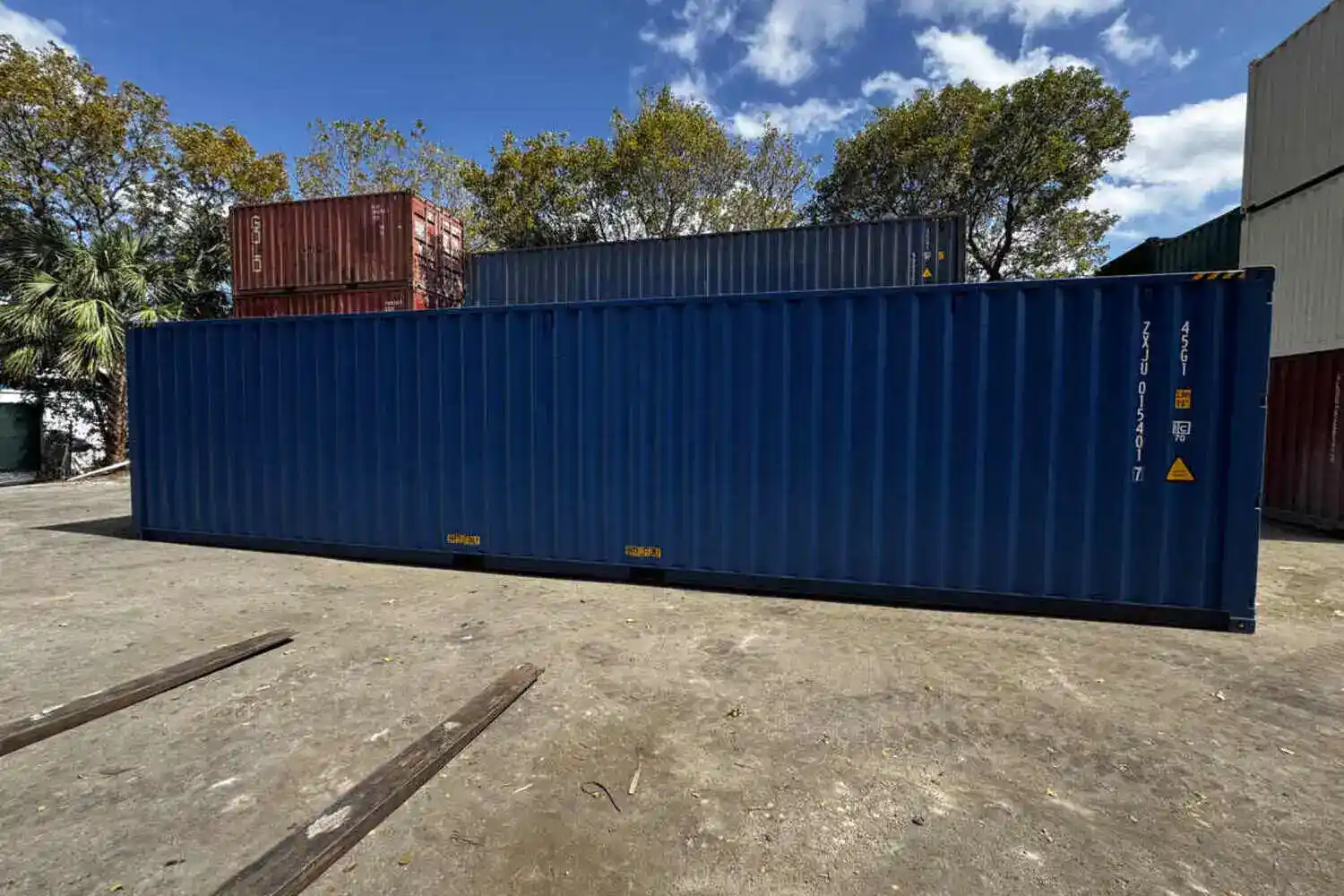
Before diving into applications and benefits, it’s important to understand the structure and specifications of 40ft shipping containers. These units are standardized ISO containers measuring approximately 40 feet in length, 8 feet in width, and 8.5 feet in height. High-cube variations offer an additional foot of vertical space, increasing overall capacity.
Like other standard shipping containers, they are constructed from heavy-duty steel and built to withstand harsh maritime conditions. Their durability ensures reliability in both transport and stationary storage applications.
Key Specifications
- Approximately 40 feet long
- 8 feet wide
- Standard height of 8.5 feet (9.5 feet for high-cube models)
- Double cargo doors on one end
- Heavy-duty steel frame and flooring
These dimensions provide nearly double the internal capacity of a 20ft unit, making them one of the most popular large shipping containers available.
Why Choose 40ft Shipping Containers?
Choosing the right container size depends on volume requirements, site space, and operational strategy. 40ft shipping containers are particularly beneficial when maximum storage efficiency per unit is a priority.
Instead of managing multiple smaller containers, a single 40 foot cargo container can often accommodate bulk inventory, oversized equipment, or consolidated shipments. This reduces handling complexity and can simplify site layout planning.
In operations where scale matters, larger units streamline storage management. Businesses that handle palletized goods, large equipment, or bulk materials often benefit from the extended capacity.
Common Uses of 40 Foot Cargo Containers
The versatility of 40ft shipping containers spans multiple industries. Their size makes them especially valuable for large-scale operations.
International Freight and Export
Large shipping containers are central to global supply chains. Their extended capacity allows businesses to ship higher volumes in fewer units, optimizing transport costs.
Bulk goods, manufactured products, and palletized shipments frequently move in 40ft containers due to their efficient volume-to-cost ratio. Fewer containers often mean simplified logistics and reduced per-unit shipping expenses.
Industrial and Commercial Storage
Manufacturing facilities and warehouses use 40ft containers for high-volume inventory storage. They provide secure, weather-resistant storage without requiring permanent construction.
For businesses that experience steady inventory turnover, the added capacity supports operational continuity and reduces congestion within primary warehouse space.
Construction and Infrastructure
Construction projects handling large materials or equipment benefit from 40 foot cargo containers. Long beams, bulk supplies, and heavy machinery can often be stored more efficiently in a single large unit rather than multiple smaller containers.
Modular Conversions
Due to their size, 40ft containers are frequently converted into modular offices, housing units, workshops, or pop-up retail spaces. The extended interior allows for more sophisticated layouts compared to smaller units.
Capacity and Storage Efficiency
One of the biggest advantages of 40ft shipping containers is volume efficiency. Their extended length allows for better stacking and organization of palletized goods.
Businesses dealing with bulk shipments often find that using fewer large containers reduces handling time and improves logistical efficiency. Instead of spreading inventory across multiple units, consolidation simplifies tracking and access.
Benefits of Larger Volume
- Reduced number of units required
- Consolidated inventory storage
- Simplified site organization
- Lower per-unit shipping cost in freight scenarios
When storage needs are substantial, large shipping containers deliver practical efficiency that smaller units may not match.
40ft Containers for Sale: Buying Considerations
If you are searching for 40ft containers for sale, evaluating specific needs is critical before making a purchase.
Not all operations require maximum size. Larger containers demand more site space and higher upfront investment. However, when used consistently, they can provide strong long-term value.
Key Factors to Evaluate
- Available site space for placement
- Delivery access and maneuverability
- Volume of goods stored
- New vs used condition
- Standard vs high-cube height requirements
High-cube models are particularly beneficial for industries storing tall equipment or requiring additional vertical clearance.
Cost Comparison: 40ft vs Smaller Containers
While 40ft shipping containers cost more upfront than smaller units, they often offer better cost-per-cubic-foot value.
For businesses that would otherwise require multiple smaller containers, consolidating into one large shipping container can reduce delivery fees and improve space efficiency.
However, if storage needs are moderate, paying for excess capacity may not be practical. Oversized infrastructure can lead to underutilized space and unnecessary capital allocation.
The decision should be based on realistic volume projections rather than assumptions about future growth.
Transportation and Site Requirements
Due to their length, 40 foot cargo containers require more delivery space than smaller models. Businesses must ensure adequate clearance for truck access and placement.
Urban environments or properties with tight access may find 40ft units more challenging to position. Planning site layout in advance prevents logistical delays.
However, once installed, they provide substantial storage with a minimal footprint relative to their internal volume.
Durability and Long-Term Performance
Like all standard shipping containers, 40ft units are built for durability. Their steel construction resists harsh weather conditions, impact, and unauthorized access.
When properly maintained, large shipping containers can last decades. Periodic inspections, minor rust treatment, and door maintenance preserve structural integrity.
For businesses seeking long-term storage infrastructure without constructing permanent buildings, this durability represents significant value.
Customization and Modification Options
The interior space of 40ft shipping containers supports extensive customization.
Common modifications include:
- Partitioned storage sections
- Climate control systems
- Electrical installations
- Office conversions
- Workshop setups
Because of their length, 40ft containers allow more complex layouts compared to smaller units. Businesses planning long-term on-site solutions often choose this size for its adaptability and spatial flexibility.
Comparing 40ft to 20ft Containers
Understanding the differences between container sizes clarifies which is most appropriate.
40ft Containers
Maximum volume capacity
Ideal for bulk transport
Suitable for modular conversions
Require larger placement area
20ft Containers
Easier to position
Lower upfront cost
Better for limited spaces
Suitable for moderate storage needs
For high-volume operations, 40ft shipping containers offer efficiency. For space-restricted sites, smaller containers may be more practical.
Security Advantages of 40ft Shipping Containers
When evaluating 40ft shipping containers, security should be part of the decision-making process. Larger volume does not mean compromised protection. These containers are engineered for international maritime transport, requiring high structural integrity and secure locking systems.
The steel construction, reinforced corner posts, and heavy-duty locking bars provide strong resistance against unauthorized access and harsh environmental conditions.
Security Benefits Include:
- Heavy-duty steel doors with locking bars
- Compatibility with high-security lock boxes
- Weather-resistant seals
- Tamper-resistant hinges
For long-term on-site storage—especially in industrial or construction environments—these features significantly reduce theft and damage risk.
Planning for Future Expansion with 40ft Containers
Another important consideration when choosing 40 foot cargo containers is long-term scalability. Businesses anticipating growth may benefit from selecting larger units early.
Because 40ft shipping containers provide substantial internal volume, they can support expansion without requiring immediate additional purchases. Instead of restructuring layouts later, companies can plan storage around future projections.
Additionally, large containers can be repositioned, stacked (where permitted), or integrated into modular layouts. This supports phased expansion strategies without permanent construction.
Selecting the right size initially can reduce long-term adjustment costs.
Environmental and Practical Advantages
Reusing large shipping containers reduces the need for new construction materials. Businesses can deploy storage infrastructure quickly without building permanent facilities.
Their modular design allows relocation rather than demolition if operational needs change. This reduces waste and supports efficient land use.
From a sustainability perspective, adapting existing container structures is often more environmentally responsible than constructing new storage buildings.
When 40ft Shipping Containers Make the Most Sense
Choosing a 40ft container is typically appropriate when:
- High storage volume is required
- Bulk transport is common
- Modular expansion is planned
- Site space is sufficient
- Long-term storage is anticipated
Large-scale operations benefit most from their extended capacity and flexibility.
Bigger Space, Greater Potential
There’s a reason 40ft shipping containers are a cornerstone of global logistics and industrial storage. They offer maximum volume, strong durability, and extensive modification potential.
For businesses handling bulk inventory, international freight, or large-scale on-site storage, 40 foot cargo containers provide the space and strength needed to operate efficiently.
However, size should always match realistic demand. When chosen strategically, 40ft containers are not just larger—they are powerful tools for growth, efficiency, and long-term operational planning.